
$89
Precision Tune-Up
21-point inspection on any residential system. Catches the small failures before July does.
Claim OfferNew customers. One unit. Expires 09/30.
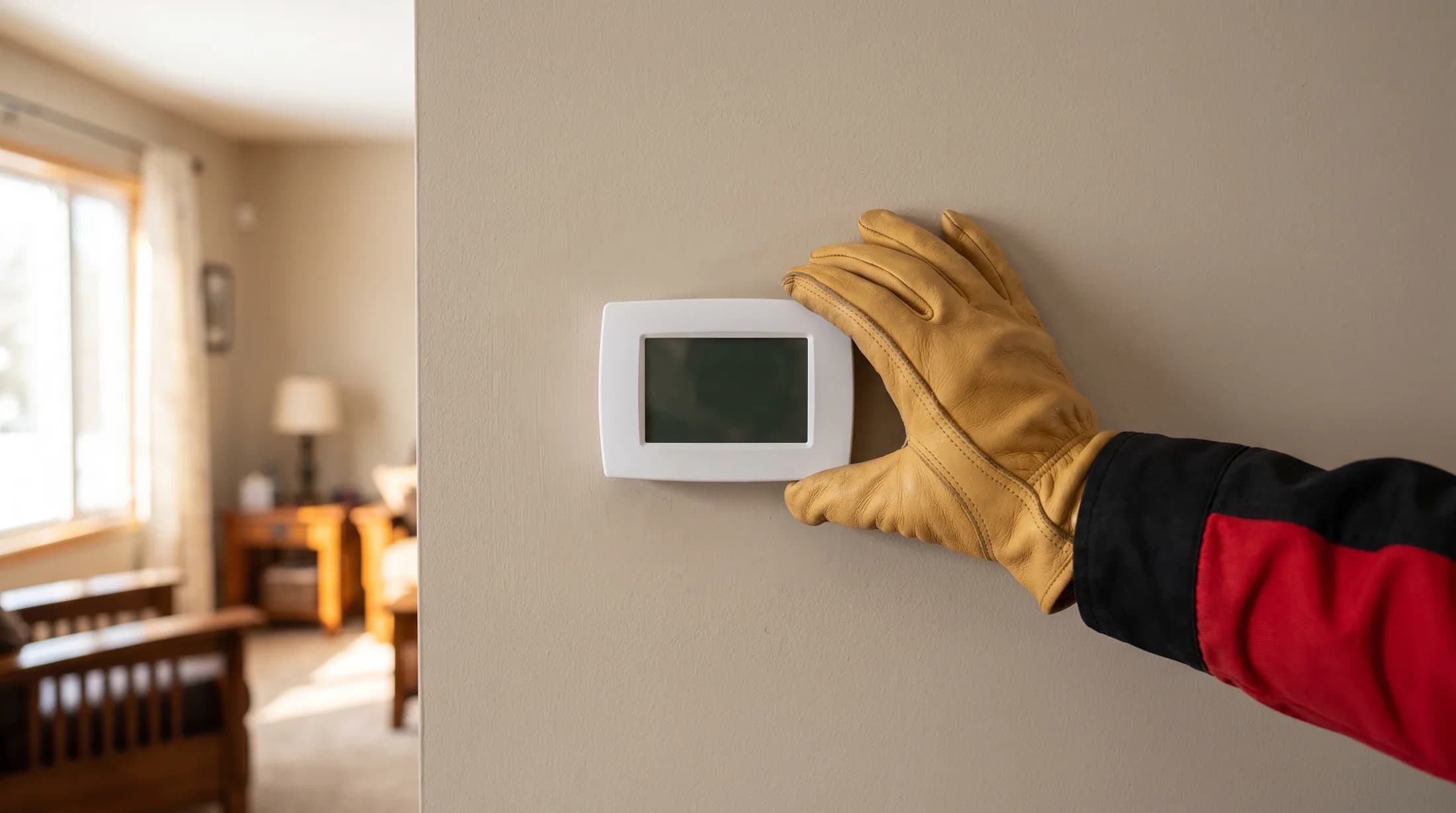
A smart thermostat is the cheapest upgrade in the house and the easiest one to get wrong. We check the wiring and the equipment before anything leaves the wall.
Swapping a thermostat looks like a fifteen-minute job, and on a straightforward furnace and AC pairing it is. The complications are the ones you cannot see from the wall plate: the common wire, and what the equipment behind it actually is.
We are family owned, based on TX-276 in Royse City, and we work across Rockwall, Fate, Wylie and the rest of the I-30 East corridor. Buy the thermostat yourself or let us suggest one.
A thermostat visit covers:
Call (972) 278-6800 or send the form and we will find you a time. Add the $89 precision tune-up if you want the system checked on the same visit.
Send this over and we'll get back to you. If the house is already warm, phoning is faster.
“My AC quit in July. Daniel was extremely professional, efficient and personable. He was very authentic and honest and somehow resolved the issue within roughly 17 minutes. No additional parts or sales gimmicks. Best service I've ever had.”
“We were very pleased with everything about the installation of the AC unit in our new office. It was done as described and everything is working properly and installed professionally. We would use this company again for sure.”
“Called at 7pm on a Saturday expecting an answering machine. Got a real person, and a tech at the house before noon Sunday. No weekend surcharge like they said. That's rare.”
$89
21-point inspection on any residential system. Catches the small failures before July does.
Claim OfferNew customers. One unit. Expires 09/30.
$50 OFF
Applied to any completed repair over $250. Stackable with your manufacturer warranty.
Claim OfferOne per household. Mention at booking.
FREE
Been told you need a whole new system? We'll inspect it and tell you straight, at no charge.
Claim OfferRequires a written quote from another company.
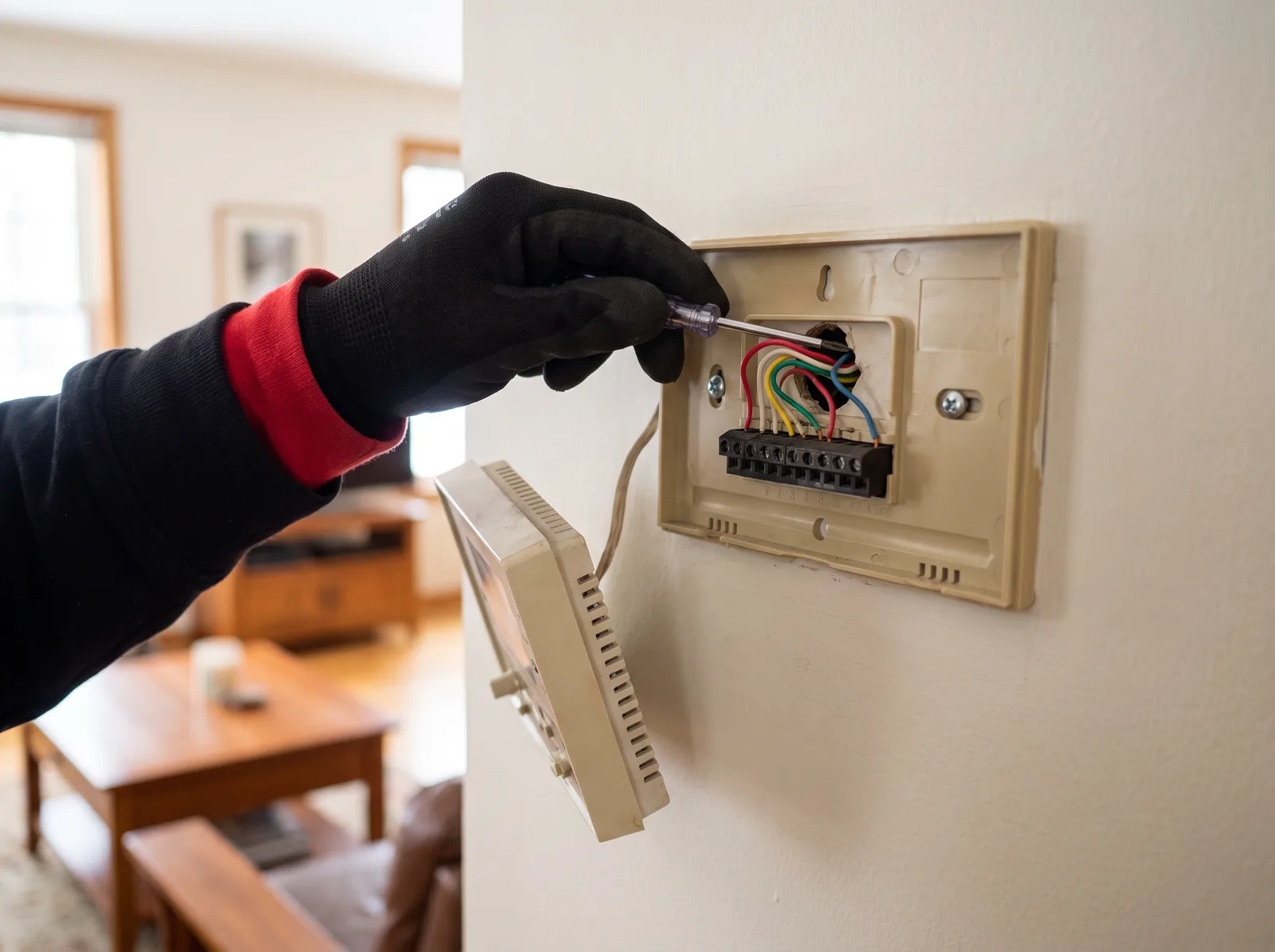
Nearly every smart thermostat needs constant 24V power for its screen and Wi-Fi radio. That arrives on the common wire, the C-wire. Plenty of corridor homes built before the mid-2000s have four conductors and no common, because the mechanical thermostat there never needed one.
There are three honest fixes. If the run back to the air handler is accessible, we pull a new five- or six-conductor cable. If it is buried, an add-a-wire adapter at the air handler shares an existing conductor to deliver the common. Failing both, some current models work without a C-wire at all.
What does not work is running it on batteries. Without a steady supply the thermostat borrows power through the equipment circuit, so it drops off Wi-Fi and the system kicks on for seconds at a time. Short-cycling like that is hard on a compressor, and the AC gets blamed for the thermostat's fault.
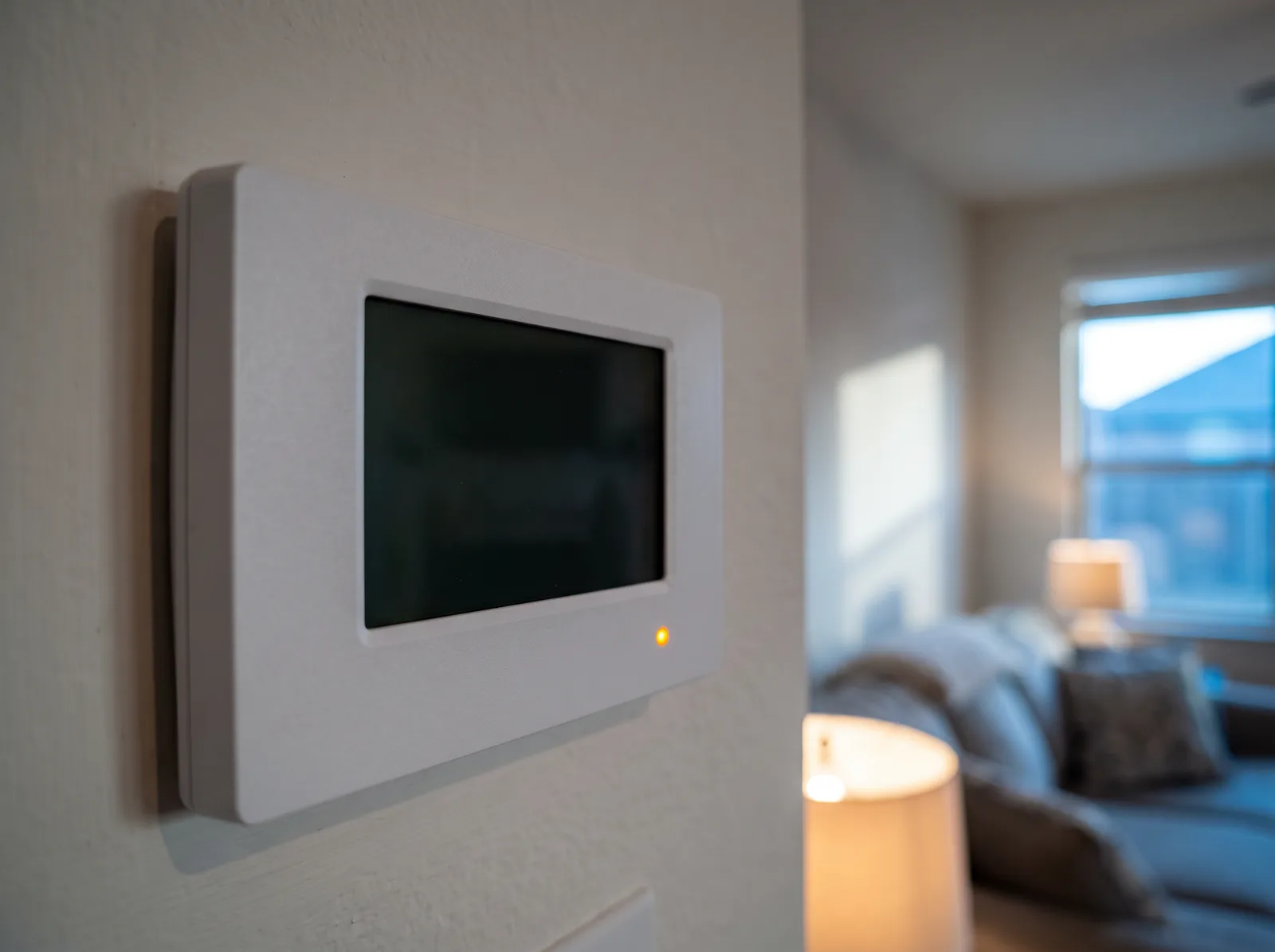
If your home runs on a heat pump rather than a gas furnace, a thermostat configured wrong will run the emergency or auxiliary heat strips instead of the heat pump. The house still gets warm and nothing sounds broken, so most people find out from a winter electricity bill that has doubled. Strip heat is resistance heat, the same idea as a toaster element, and it draws far more power than the heat pump it stood in for.
The cause is wiring. A heat pump switches its reversing valve on O or B, while a furnace calls for heat on W. Treat O/B like a W and the thermostat asks for the strips every time you turn the temperature up. Here is how to spot it:

A thermostat is a controller, not a cure. If a room never gets comfortable, the cause is usually ductwork, undersized equipment or a refrigerant charge that has leaked down. A smarter screen reports the problem clearly, but it does not move more air.
Where it earns its keep is scheduling. Letting the house drift a few degrees while everyone is out, then bringing it back before anyone is home, cuts runtime more than any single feature on the box.
The old thermostat comes off, the wiring gets photographed, and we confirm what is behind it: gas furnace, straight cool, heat pump or dual fuel.
Supply your own or let us suggest one that suits the system and your C-wire situation. If it cannot control your equipment, you hear that first.
Power, wiring and mounting first, then the settings that matter: system type, reversing valve orientation, auxiliary heat lockout and cycle rate.
We call for heating and cooling in turn, confirm the right stage responds to each, then set up the schedule and the app with you.
If yours isn't here, call and ask. We'd rather answer it now than have you guess.
Ask Us DirectlyMost need one for constant power. If your home was never wired with a common, we can pull a new cable, fit an add-a-wire adapter at the air handler, or fit a model built to run without one.
Yes. We check it against your equipment first, because the only thing worse than a thermostat you have to return is one installed on a system it cannot control.
On a heat pump, that usually means the thermostat is calling for auxiliary or emergency heat instead of letting the heat pump work. Check the screen on a mild day: if it reads Aux Heat or Em Heat well above freezing, the O/B wiring or the system type setting is wrong. That is a service visit, not a new system.
No. That is normally ductwork, sizing or charge, and a thermostat cannot move air it is not given. It will show how long the system runs to hold a setting, which is a useful place to start looking.
Less than for an empty house, but scheduling still helps. A modest overnight setback and a gradual recovery reduce runtime compared with holding one number around the clock.
Dallas heat has a way of testing every part of your home, and your air conditioner usually takes the hardest hit.
Read More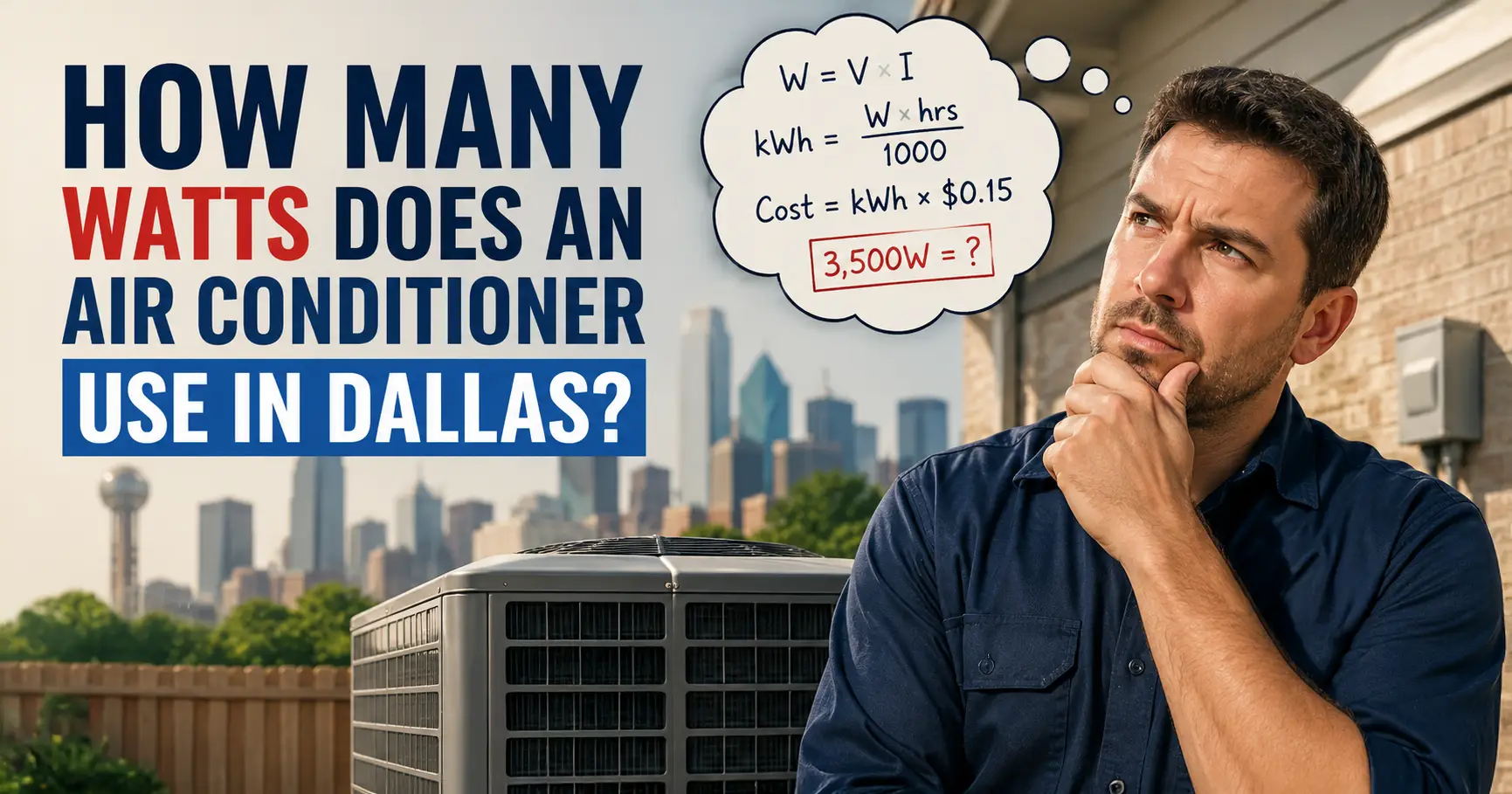
Wondering how many watts your air conditioner uses in Dallas? Power consumption varies by system type, size, efficiency, and runtime, with central air conditioners typically using between 1,500 and 5,000 watts. Learn what affects AC energy usage, how to estimate operating costs, and the steps homeowners can take to lower summer cooling bills.
Read More
Choosing between HVAC repair and replacement can be tough, especially when an older system still runs but no longer performs well. Learn the key signs, cost factors, and 2026 efficiency considerations that can help you decide whether to repair your current system or invest in a new one.
Read More
Same-day service across the I-30 East corridor. Saturdays included, at no extra charge.