
$89
Precision Tune-Up
21-point inspection on any residential system. Catches the small failures before July does.
Claim OfferNew customers. One unit. Expires 09/30.
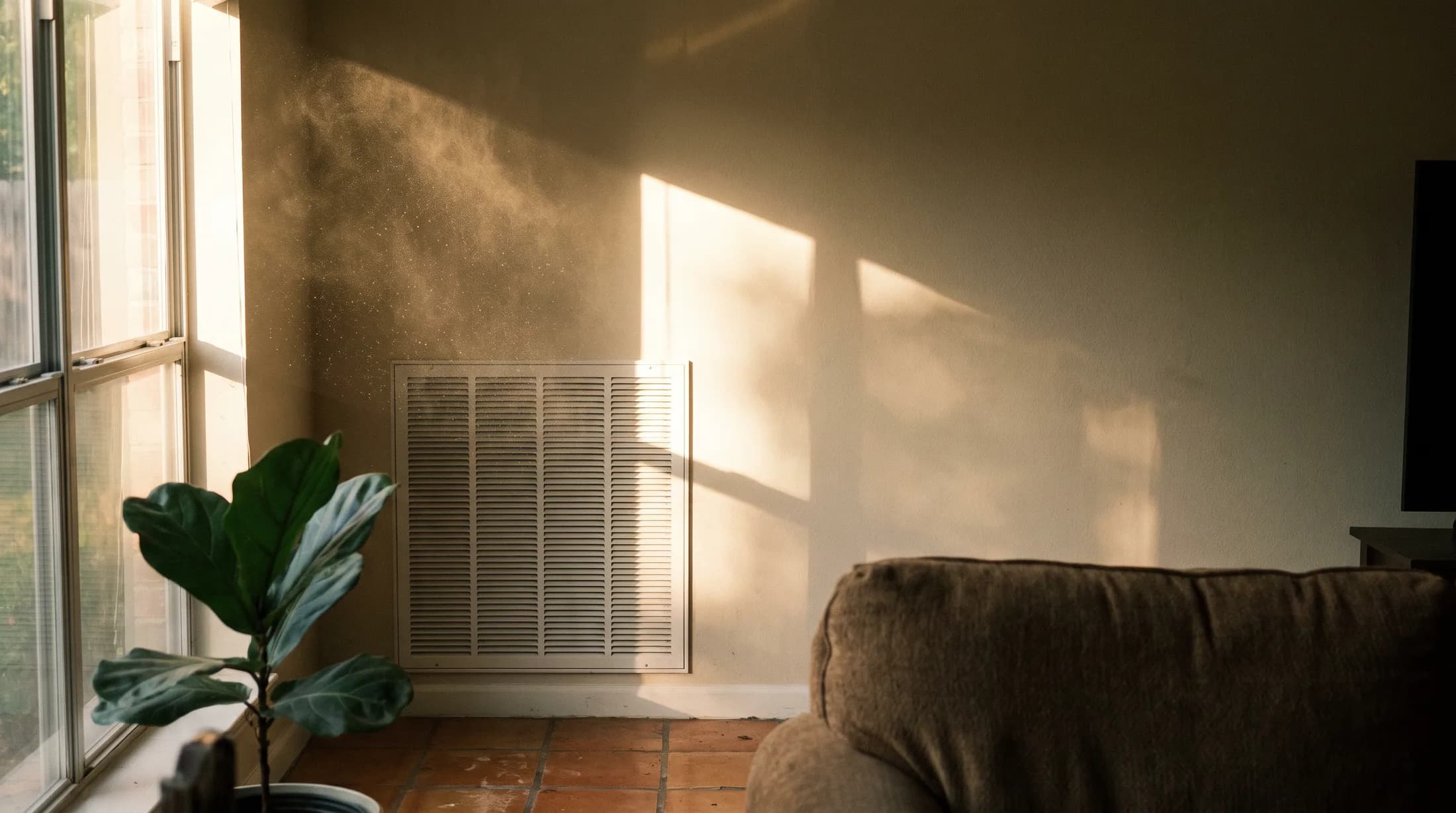
If the house makes your eyes itch in January and again every March, the problem usually isn't outside. It's what your system keeps moving around indoors. We measure first, then tell you what's worth fixing.
Air quality is the easiest category in this trade to oversell, so here's our position first. Most homes on the corridor don't need four pieces of equipment bolted to the air handler. They need a filter the blower can pull through, ducts that are sealed and reasonably clean, and a system that runs long enough to pull moisture out of the air. Get those three right and the rest is optional.
We've worked out of 5095 TX-276 in Royse City since 2013, which keeps Rockwall County, Fate and Wylie on our daily route. That matters more than it sounds, because the answer depends on the house. Flex duct baking in an attic, a filter slot barely wider than a paperback and equipment picked off square footage alone are all common in newer corridor builds, and all three surface as an air quality complaint.
An air quality visit with A/C Rescue includes:
Call (972) 278-6800 and a real person picks up, day or night. If you'd rather start small, the $89 precision tune-up puts a technician in front of the system, and the filter and humidity conversation happens there anyway.
Send this over and we'll get back to you. If the house is already warm, phoning is faster.
“My AC quit in July. Daniel was extremely professional, efficient and personable. He was very authentic and honest and somehow resolved the issue within roughly 17 minutes. No additional parts or sales gimmicks. Best service I've ever had.”
“We were very pleased with everything about the installation of the AC unit in our new office. It was done as described and everything is working properly and installed professionally. We would use this company again for sure.”
“Called at 7pm on a Saturday expecting an answering machine. Got a real person, and a tech at the house before noon Sunday. No weekend surcharge like they said. That's rare.”
$89
21-point inspection on any residential system. Catches the small failures before July does.
Claim OfferNew customers. One unit. Expires 09/30.
$50 OFF
Applied to any completed repair over $250. Stackable with your manufacturer warranty.
Claim OfferOne per household. Mention at booking.
FREE
Been told you need a whole new system? We'll inspect it and tell you straight, at no charge.
Claim OfferRequires a written quote from another company.
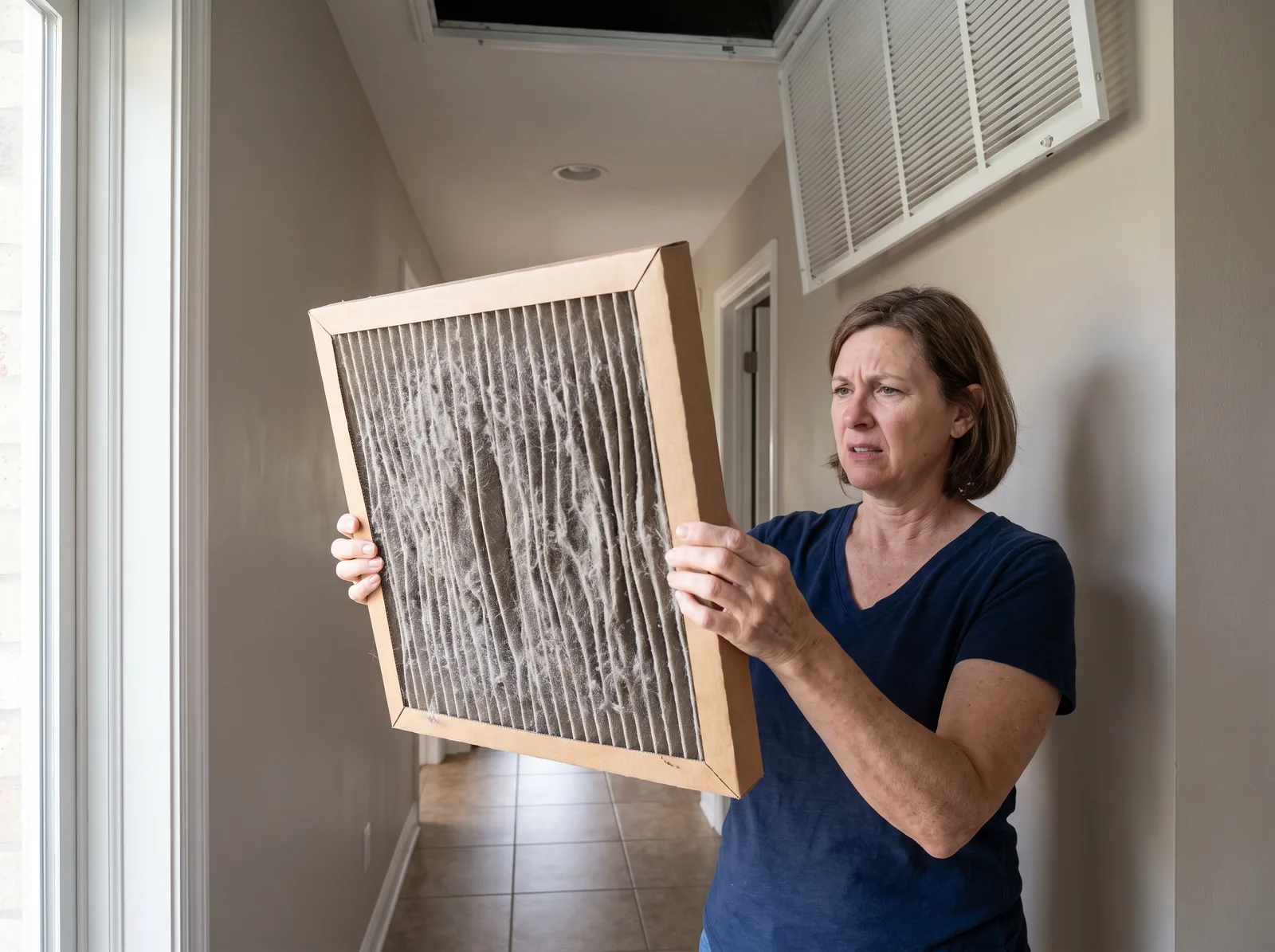
Ask most people when allergy season runs and they'll say spring. In this part of Texas there isn't an off season, there's a rotation, and each stretch of it lands on the house a different way.
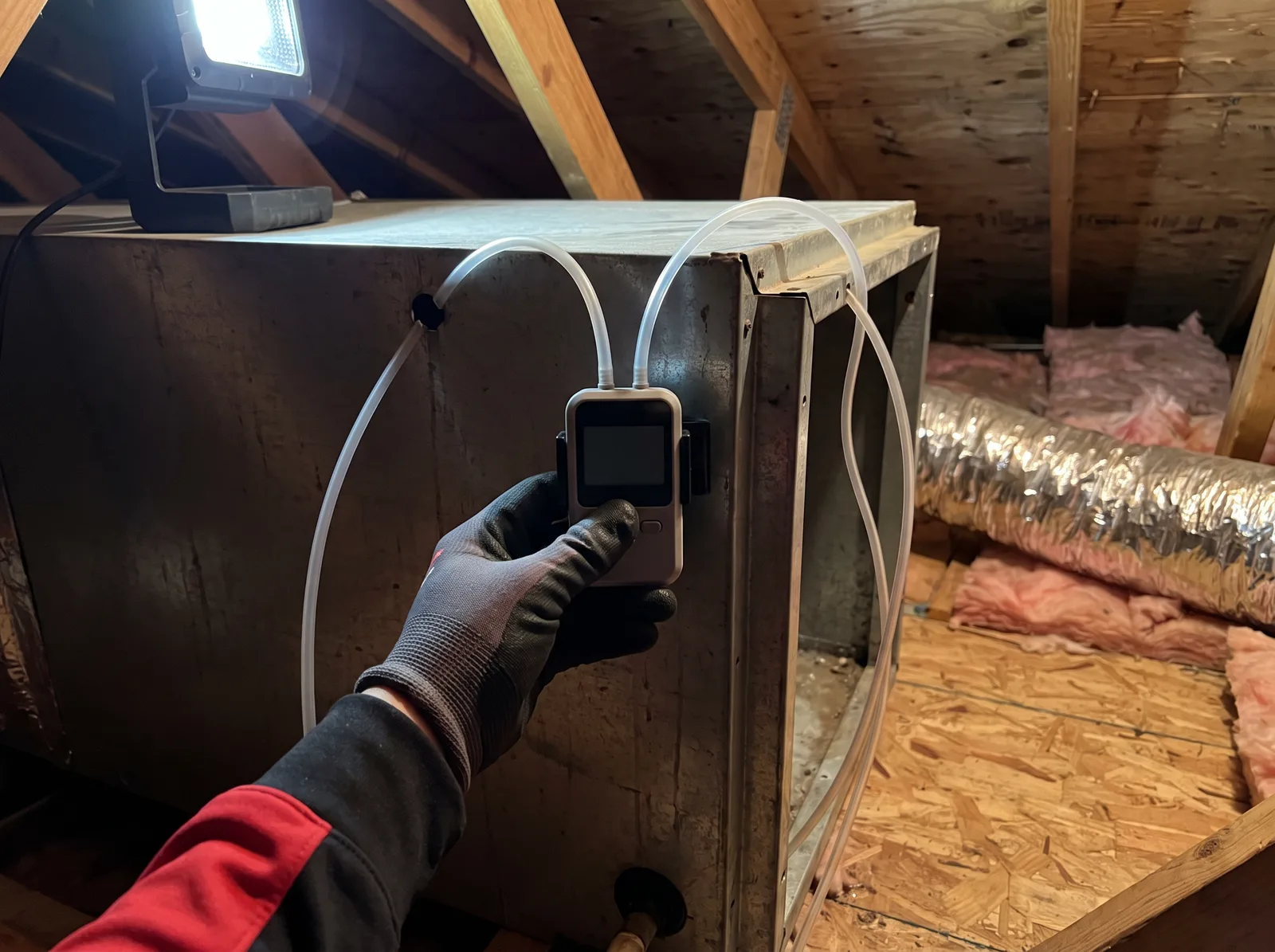
Filter media is rated on the MERV scale, and the instinct is to buy the highest number on the shelf. That instinct is how people wreck coils.
A filter works by making air fight its way through it. The finer the media, the harder the fight, and your blower only has so much push. Drop a restrictive filter into a return sized for a cheap one and static pressure climbs, airflow across the evaporator coil falls, and the coil runs colder than it was designed to. That road ends in a frozen coil in July, a blower motor working past its rating, and in bad cases a compressor taking liquid refrigerant. Higher MERV is not automatically better. A five dollar part can cost you a coil.
So we take a reading first. MERV 8 handles household dust and lint. MERV 11 to 13 reaches the finer material, pollen fragments, pet dander and smoke particles, which is usually where a household that reacts to the calendar above wants to be. Whether your system can carry it depends on return area, duct design and the blower, which is why the answer differs house to house. Where the blower can't take it, the fix is often a deeper media cabinet, four or five inches instead of one, which buys surface area at lower resistance. Occasionally it's telling you the one-inch filter you already buy is the right call.
Change intervals do more work than most upgrades. A clean cheap filter beats a loaded expensive one every time.
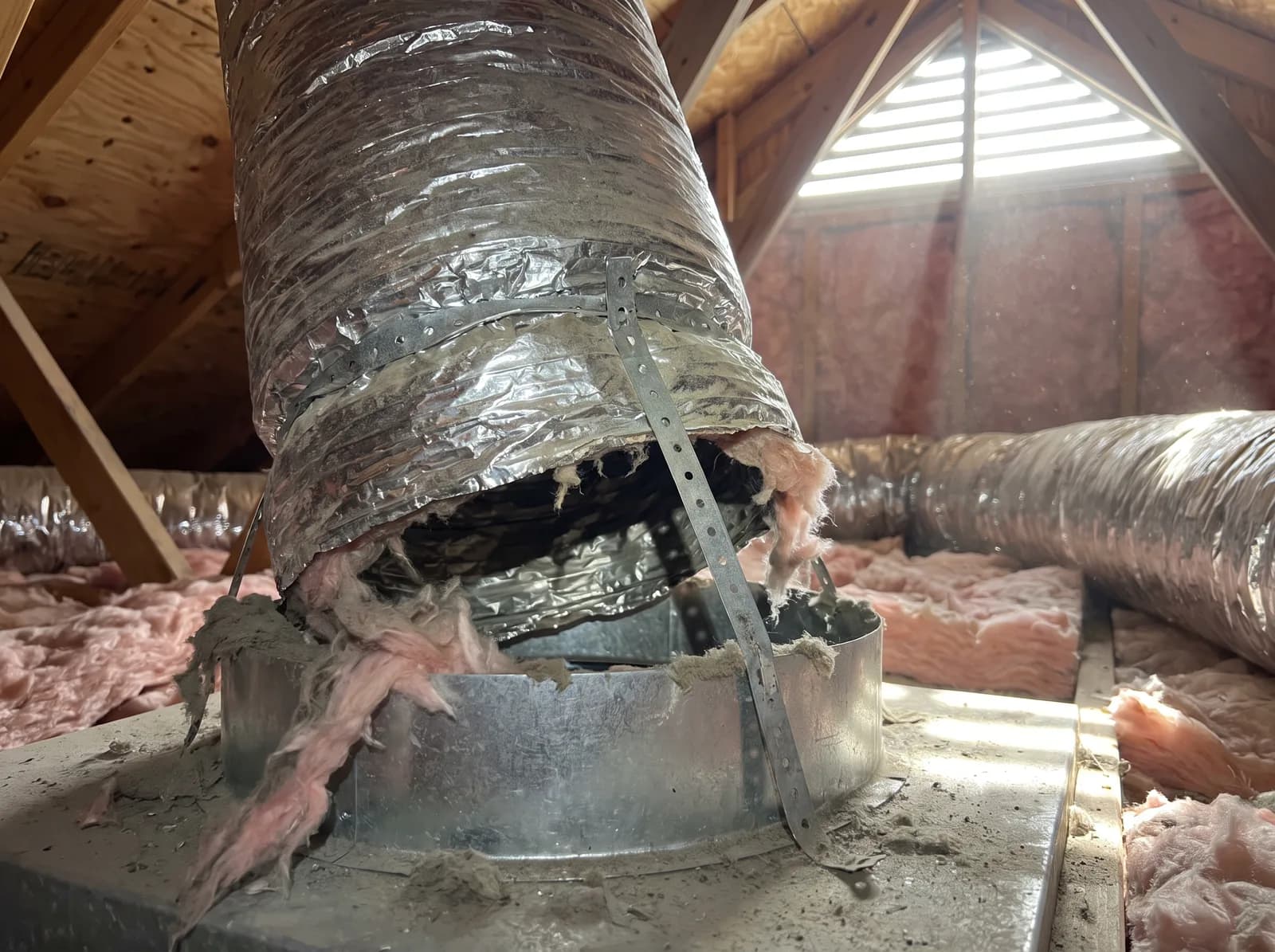
A filter only cleans the air that reaches it. Everything past the air handler is a sealed system in theory and rarely one in practice. Flex duct that has sat through fifteen corridor summers works loose at the collars, and a return leaking up in the attic pulls attic air, insulation fibers and all, straight onto the supply side. Sealing that often changes what comes out of the vents more than any piece of equipment will. Cleaning is the other half of it, and worth doing when there is an actual reason to.
Air purification is where this category earns its bad reputation, so we'll be blunt about scope. A UV lamp is a fixed light aimed at a fixed surface, normally the evaporator coil and drain pan, which stay wet all cooling season. That is the whole of it: not a filter, and no help to air sitting in a closed bedroom. In-duct ionizers act only on air passing them, so they reach whatever the blower is moving and nothing else. We'll fit either one for a homeowner who wants it and knows what it is, and we'll say plainly that neither replaces a good filter or sealed ducts.
Humidity is the complaint people describe without naming it: the thermostat reads 74 and the house still feels clammy. Gulf air comes up this way all summer, and an oversized system makes that worse rather than better. Too much capacity means short cycles. The thermostat is satisfied on temperature in a few minutes, the coil never runs long enough to condense much water out, and the unit shuts off. You get cold, damp air. The fix might be fan settings, so the blower isn't re-evaporating water off a wet coil, or a whole-home dehumidifier tied into the return. Bringing a house toward the 45 to 55 percent range changes how the same thermostat setting feels.
We start with the complaint: which rooms, which months, who reacts and when. Then we look at the returns, the filter slot, the registers and the attic.
Static pressure across the filter and coil, airflow, indoor humidity and the duct connections. Numbers decide what your system can carry, not a brochure.
Everything we found, in writing, ordered by what changes the most for the least money. Anything that wouldn't earn its keep is marked as such.
After the work we take the same readings again, confirm airflow hasn't been strangled, set the humidity target and give you the filter interval your system needs.
If yours isn't here, call and ask. We'd rather answer it now than have you guess.
Ask Us DirectlyWe can't tell you that, and anyone who does is guessing about your house and your body. What we can describe is what the equipment physically does: a filter captures particles out of the air passing through it, sealed ducts stop unfiltered attic air reaching the supply, and humidity control changes how the air feels. Get those three right and judge the result yourself.
Whatever your blower can pull through, which takes a measurement rather than a guess. MERV 8 covers dust and lint. MERV 11 to 13 catches finer material and is where most allergy-conscious households want to land. Push past what the system was built for and you lose airflow, which costs you comfort, efficiency and eventually the coil. A deeper media cabinet is usually how you get the rating without the penalty.
A one-inch filter usually wants changing every 30 to 60 days through the cooling season, sooner with pets or construction nearby. A four or five inch media filter typically runs six months to a year. The honest test is holding it up to a light: if you can't see through it, it's overdue.
Often not. It's worth doing when there's a reason: a renovation, a rodent or moisture problem, visible debris at the registers, or a house that has never had it done. It isn't an annual service, and we'll tell you when yours doesn't need it. When it does, our own crew does the work rather than a subcontractor.
Usually short cycling. If the system has more capacity than the house needs, it reaches the thermostat setting fast and stops before the coil has run long enough to pull much moisture out. You get cold, damp air and a thermostat insisting everything is fine. The fix can be fan settings, staging, or a dedicated dehumidifier. It's almost never a bigger system, since that's what caused it.

Dallas heat has a way of testing every part of your home, and your air conditioner usually takes the hardest hit.
Read More
Wondering how many watts your air conditioner uses in Dallas? Power consumption varies by system type, size, efficiency, and runtime, with central air conditioners typically using between 1,500 and 5,000 watts. Learn what affects AC energy usage, how to estimate operating costs, and the steps homeowners can take to lower summer cooling bills.
Read More
Choosing between HVAC repair and replacement can be tough, especially when an older system still runs but no longer performs well. Learn the key signs, cost factors, and 2026 efficiency considerations that can help you decide whether to repair your current system or invest in a new one.
Read More
Same-day service across the I-30 East corridor. Saturdays included, at no extra charge.