
$89
Precision Tune-Up
21-point inspection on any residential system. Catches the small failures before July does.
Claim OfferNew customers. One unit. Expires 09/30.
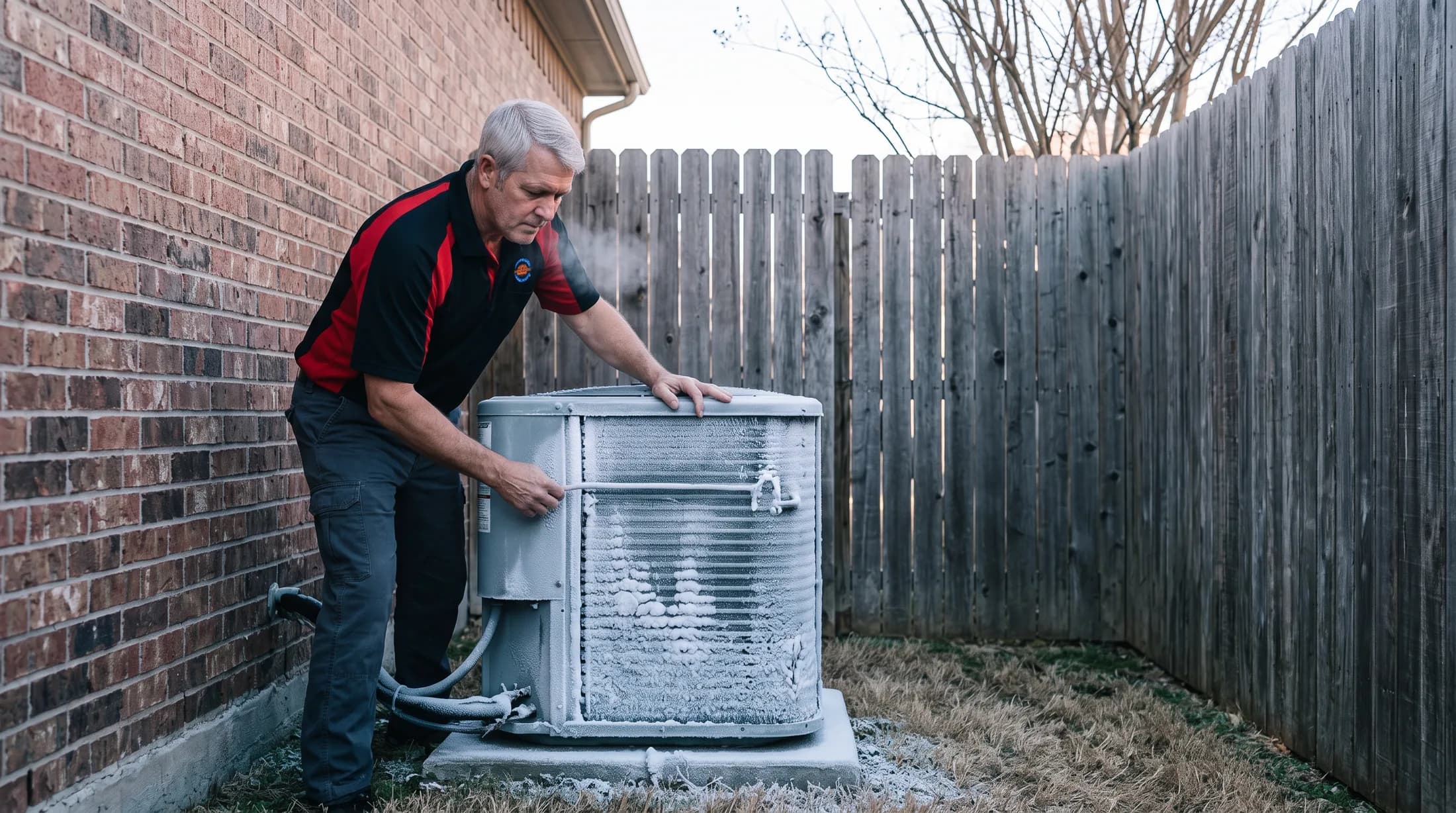
A heat pump cools and heats from one box, which is why it sits behind nearly every new corridor build. It behaves nothing like the gas furnace you grew up with. We repair, service and install them, and we say plainly what is a fault and what is not.
A heat pump is one machine doing two jobs. In summer it moves heat out of the house like any air conditioner. In winter it runs the same cycle backward, pulling heat in from outdoor air that feels cold to you. A January complaint can therefore trace back to a cooling-side part, which is why this work straddles our AC repair and our heating repair.
New construction through Royse City, Fate and Rockwall leans hard on heat pumps, so many of the homes we visit have owners meeting one for the first time. Plenty of the winter calls are not repairs at all. They are normal behavior nobody explained at closing, and the three below get misread most.
What we handle on a heat pump call:
Call (972) 278-6800 and a real person picks up, or send the form and we will call you back.
Send this over and we'll get back to you. If the house is already warm, phoning is faster.
“My AC quit in July. Daniel was extremely professional, efficient and personable. He was very authentic and honest and somehow resolved the issue within roughly 17 minutes. No additional parts or sales gimmicks. Best service I've ever had.”
“We were very pleased with everything about the installation of the AC unit in our new office. It was done as described and everything is working properly and installed professionally. We would use this company again for sure.”
“Called at 7pm on a Saturday expecting an answering machine. Got a real person, and a tech at the house before noon Sunday. No weekend surcharge like they said. That's rare.”
$89
21-point inspection on any residential system. Catches the small failures before July does.
Claim OfferNew customers. One unit. Expires 09/30.
$50 OFF
Applied to any completed repair over $250. Stackable with your manufacturer warranty.
Claim OfferOne per household. Mention at booking.
FREE
Been told you need a whole new system? We'll inspect it and tell you straight, at no charge.
Claim OfferRequires a written quote from another company.
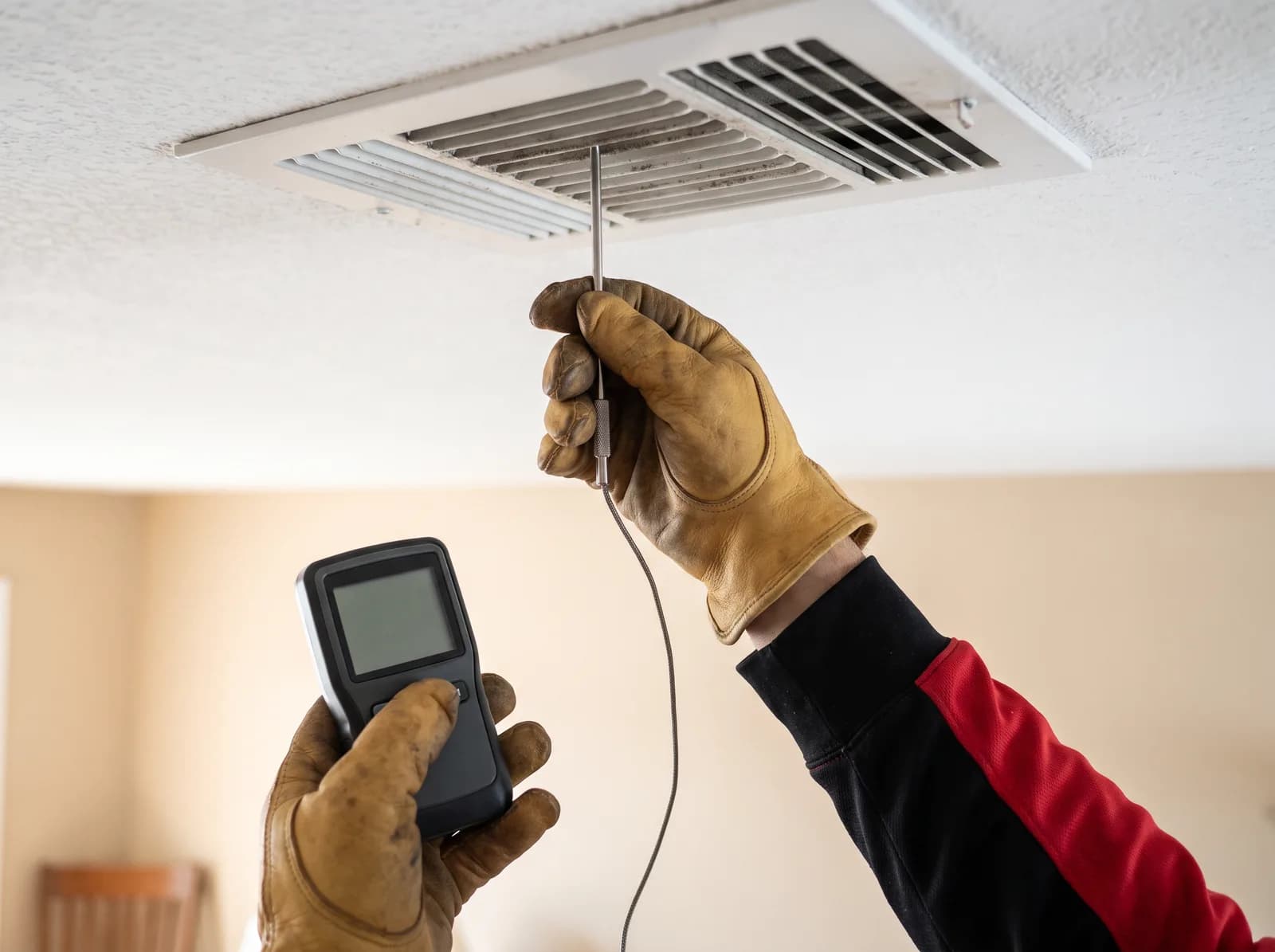
This is the call we get most, and the system is nearly always fine. Heat pump supply air runs around 95°F. A gas furnace runs around 130°F. Both hold a house at 70, but 95 sits below your body temperature, so a hand at the vent reads it as cool rather than warm.
A furnace burns fuel and makes a small volume of very hot air. A heat pump moves a large volume of mildly warm air over longer cycles. Long run times are the design, not a symptom. What should worry you is a room losing ground against the thermostat, or air that is genuinely cold at the register.
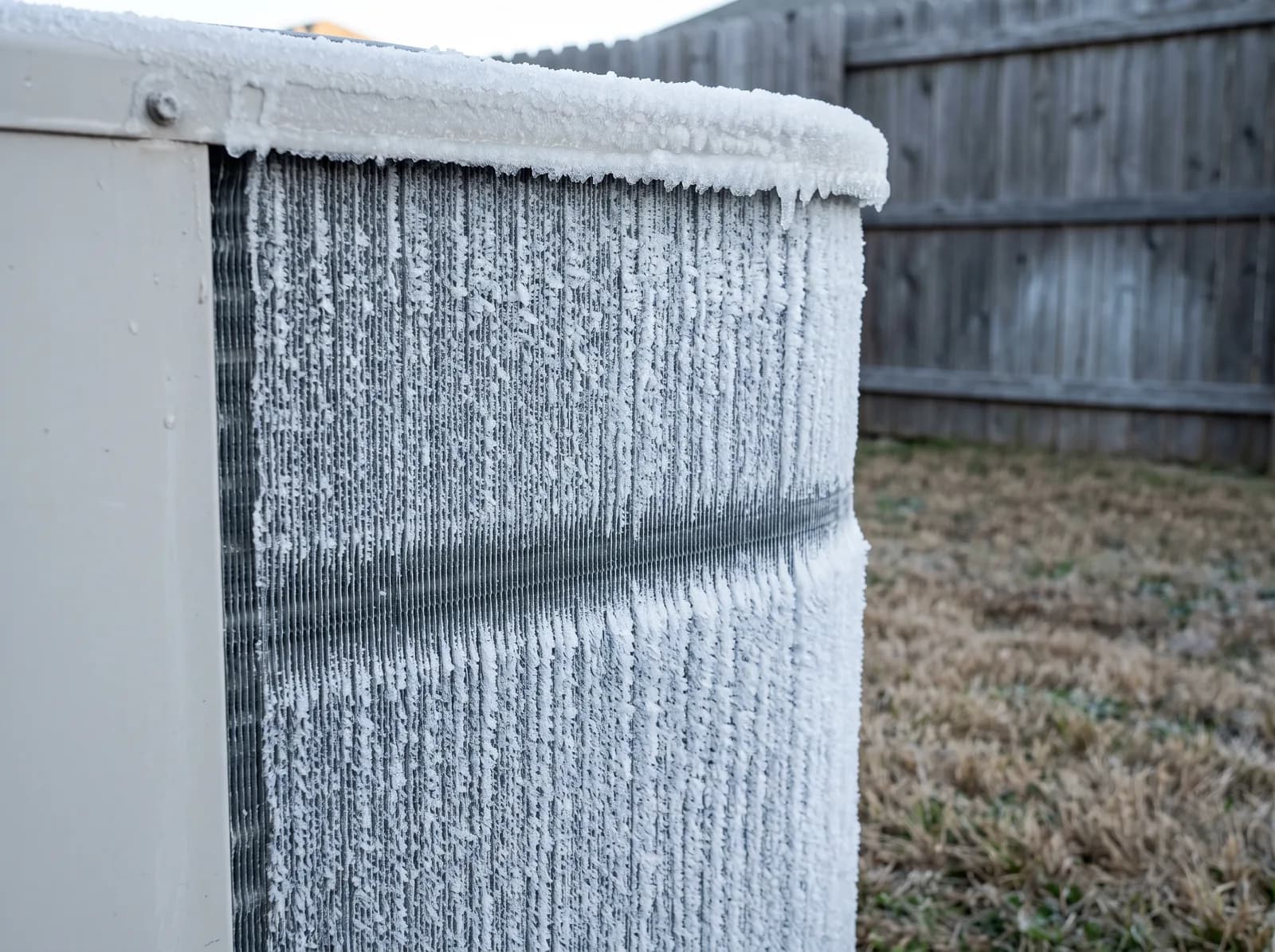
On a damp thirty-something-degree morning the outdoor coil frosts over. That is physics, not a fault. The system reverses itself for a few minutes to melt the ice, which is why you may see steam rolling off the unit, hear a loud whoosh as the reversing valve shifts, and get cool air indoors until it finishes. Then it goes back to heating.
What is not normal is a unit that cannot get itself back out. A failed defrost board, sensor or reversing valve leaves it stuck, and stuck costs money every hour.
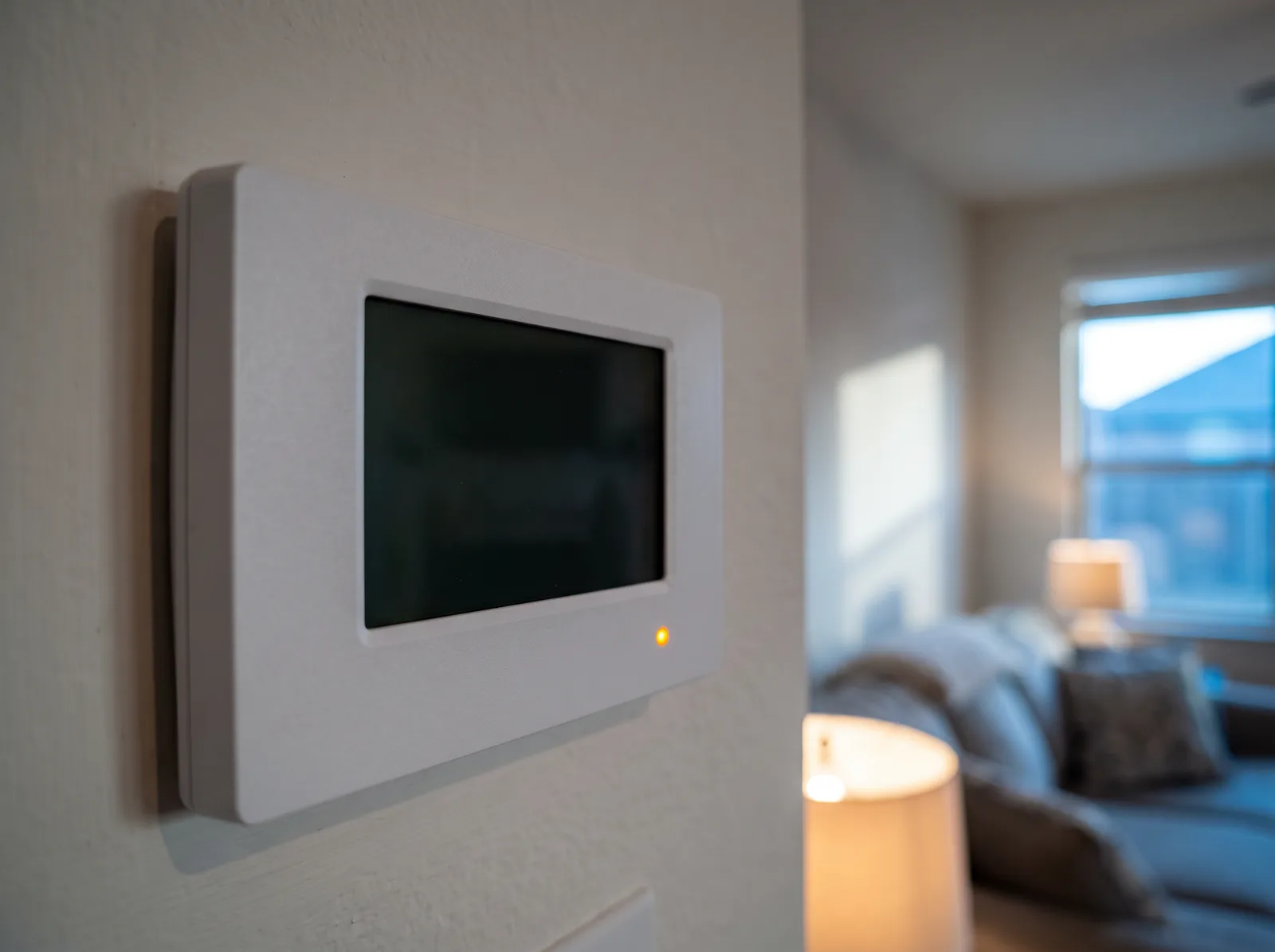
Nearly every heat pump has electric resistance strips in the air handler as backup. Auxiliary heat is the thermostat bringing those strips on automatically when the heat pump cannot keep up, usually in a hard freeze or when someone jumps the setpoint five degrees at once. It is also the costliest way there is to warm a house.
Emergency heat is different. It is a manual mode that shuts the heat pump off and runs on strips alone. It exists for one situation: the heat pump has failed and you need heat until we arrive. A thermostat left in emergency heat all winter, or one wired so any call for heat also energizes the strips, is the most common reason a corridor electricity bill doubles in winter.
A heat pump fails in heating, in cooling, or in the changeover, so we test the full cycle, not just the season you called about.
Supply temperature, coil condition, defrost operation and what the thermostat is actually calling for, explained at the unit in plain terms.
In writing, before anything is opened up. If the honest answer is that nothing is broken, we say so and the visit ends there.
Every repair closes with the thermostat configured for a heat pump, so aux and emergency heat stay where they belong.
If yours isn't here, call and ask. We'd rather answer it now than have you guess.
Ask Us DirectlyProbably not. Heat pump supply air runs around 95°F against a furnace's 130°F or so, which is below body temperature and feels cool on your hand while the house heats fine. If the room is holding flat or falling rather than climbing toward your setpoint, call us.
In cold damp weather the coil frosts and the system runs a defrost cycle to clear it, with steam and a loud whoosh. That is normal. A unit that stays iced for hours, or one that defrosts every few minutes, points to a defrost control or sensor fault.
Only if the heat pump itself has quit. Emergency heat turns the heat pump off and runs the electric strips alone, which will warm the house and cost you plenty. Use it to get through a cold night, then call us so it does not stay your setting all winter.
Yes. We're an American Standard Customer Care Dealer and our own crew does the install, thermostat and changeover setup included. Financing is available on approved credit, and the second opinion on any written replacement quote is free.
Partly. Capacitors, contactors, refrigerant and airflow are shared with any air conditioner, so much of our AC repair page applies. The heat pump specific parts are the reversing valve, the defrost control and the backup strips, which is where this meets our heating repair.
Dallas heat has a way of testing every part of your home, and your air conditioner usually takes the hardest hit.
Read More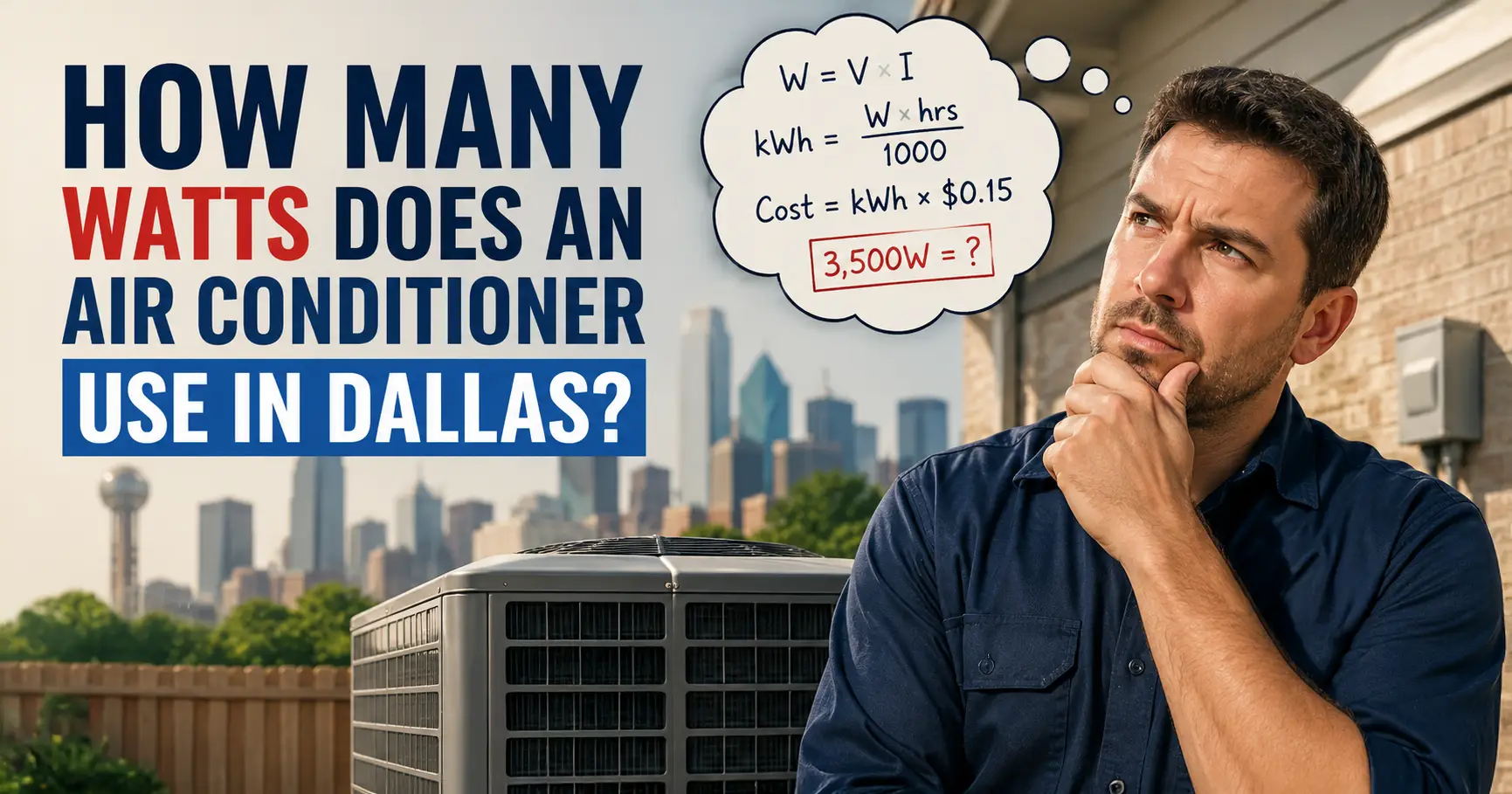
Wondering how many watts your air conditioner uses in Dallas? Power consumption varies by system type, size, efficiency, and runtime, with central air conditioners typically using between 1,500 and 5,000 watts. Learn what affects AC energy usage, how to estimate operating costs, and the steps homeowners can take to lower summer cooling bills.
Read More
Choosing between HVAC repair and replacement can be tough, especially when an older system still runs but no longer performs well. Learn the key signs, cost factors, and 2026 efficiency considerations that can help you decide whether to repair your current system or invest in a new one.
Read More
Same-day service across the I-30 East corridor. Saturdays included, at no extra charge.