
$89
Precision Tune-Up
21-point inspection on any residential system. Catches the small failures before July does.
Claim OfferNew customers. One unit. Expires 09/30.
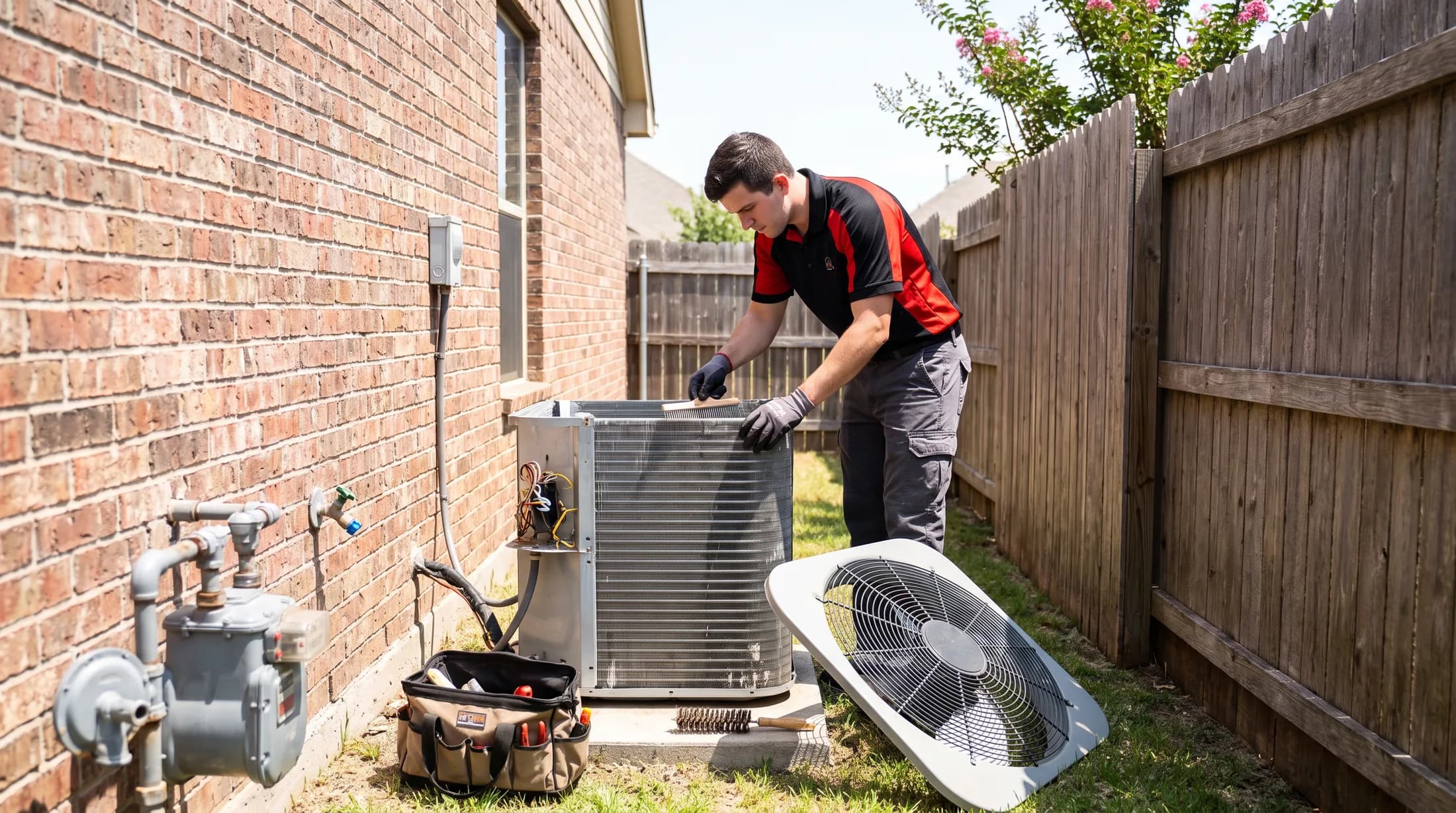
A tune-up is the cheapest hour you'll spend on your system all year. Ours is $89, it covers 21 checks, and every one of them is published on this page so you know exactly what you're buying.
Spring is the one honest window your system gets. It has coasted through a mild winter, the condenser coil is carrying a season of dust and grass, and the capacitor that has been quietly drifting out of spec for two years is still just about holding on. Run the system hard in April and you find that out while it's cheap to deal with. Wait until the first genuinely hot Saturday and you find it out the expensive way, along with everyone else in the corridor.
Our shop sits on TX-276 in Royse City and the same family has run it since 2013, so Rockwall, Fate and Wylie fall inside the daily route rather than at the far end of a metroplex drive. The $89 precision tune-up covers any residential system, any brand, and it is a real inspection rather than a gauge reading and a handshake. The 21 points are listed below, in the order a technician works through them.
Your $89 precision tune-up includes:
Call (972) 278-6800 or send the form and we'll get you on the schedule. New customers, one unit, offer expires 09/30.
Send this over and we'll get back to you. If the house is already warm, phoning is faster.
“My AC quit in July. Daniel was extremely professional, efficient and personable. He was very authentic and honest and somehow resolved the issue within roughly 17 minutes. No additional parts or sales gimmicks. Best service I've ever had.”
“We were very pleased with everything about the installation of the AC unit in our new office. It was done as described and everything is working properly and installed professionally. We would use this company again for sure.”
“Called at 7pm on a Saturday expecting an answering machine. Got a real person, and a tech at the house before noon Sunday. No weekend surcharge like they said. That's rare.”
$89
21-point inspection on any residential system. Catches the small failures before July does.
Claim OfferNew customers. One unit. Expires 09/30.
$50 OFF
Applied to any completed repair over $250. Stackable with your manufacturer warranty.
Claim OfferOne per household. Mention at booking.
FREE
Been told you need a whole new system? We'll inspect it and tell you straight, at no charge.
Claim OfferRequires a written quote from another company.
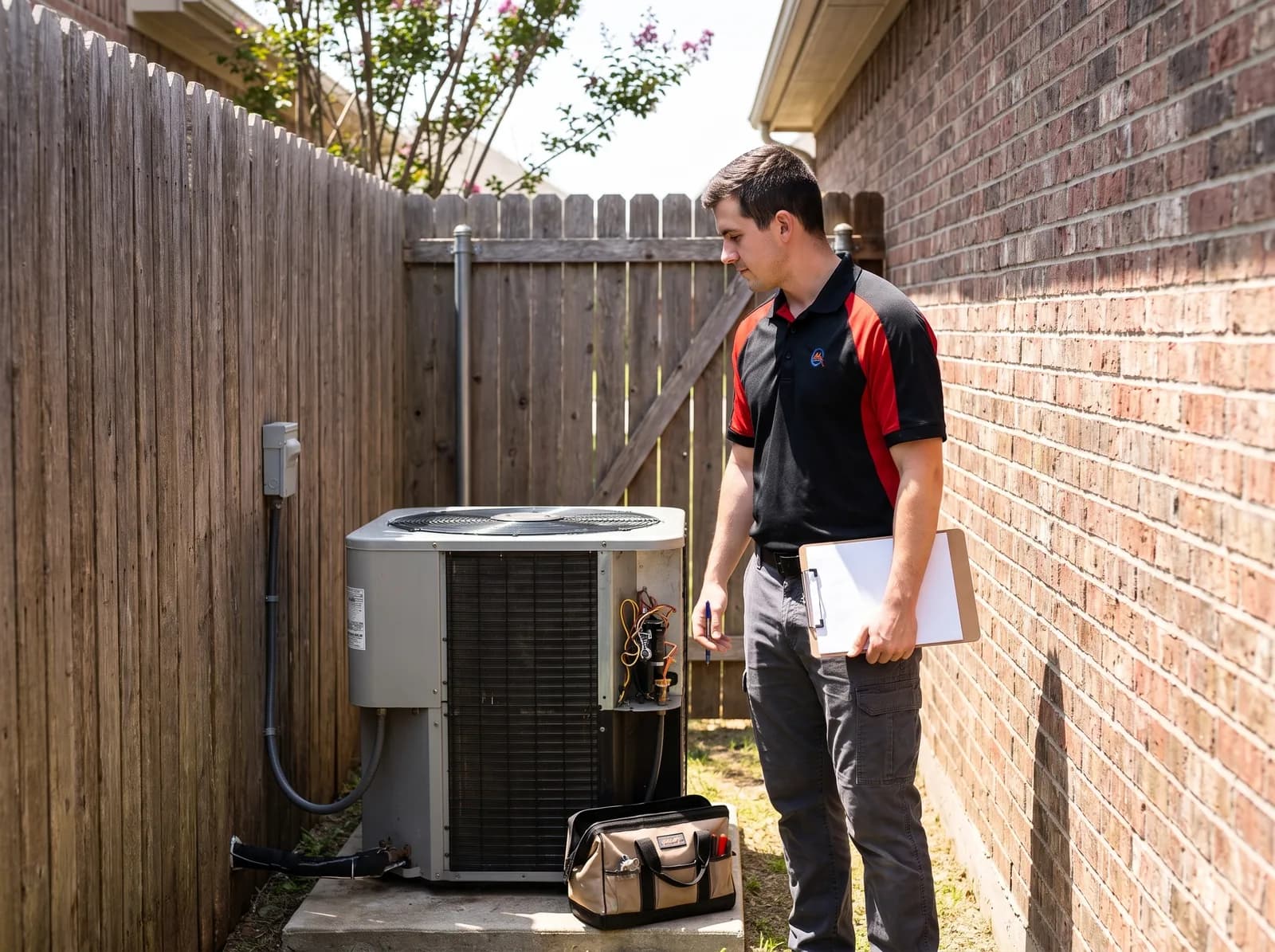
Every company in this market advertises a 21-point inspection. Almost none of them will tell you what the 21 points are. Here is the list, grouped the way the visit runs: electrical first, then refrigerant, then airflow, then drainage, then controls, then the cabinet and the pad.
If a point can't be completed on your equipment, the technician tells you which one and why instead of ticking it and moving on. You keep the readings, so next spring's numbers mean something sitting next to this spring's.
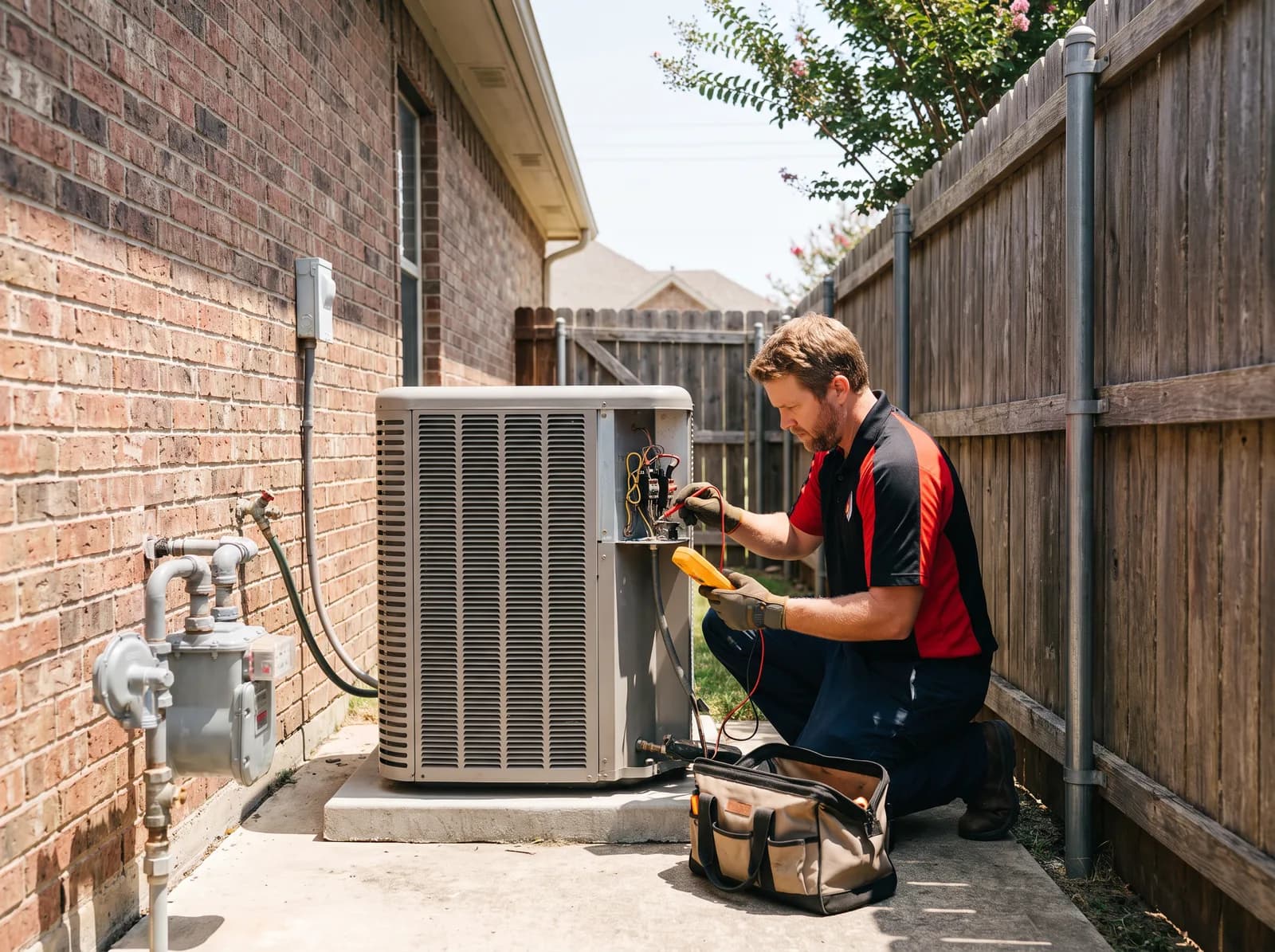
A tune-up is maintenance, not insurance. What it reliably catches is the small stuff that only fails under load: a capacitor that has drifted below its rated microfarads, a contactor pitting itself toward a stuck compressor, a drain line silting up behind the pan, a condenser coil packed tight enough that the system can no longer shed heat. Those are the calls that arrive in the first hot week, and most of them are already visible in March.
What it can't do is make a fourteen-year-old compressor young again. No amount of servicing reverses wear on a system near the end of its life, and anyone promising that is selling you something. What we will do is tell you plainly what condition yours is in, roughly how many seasons are realistic, and whether the smart money is on repairing or on starting to plan. If another company has already handed you a written replacement quote, our second opinion on it is free.
The honest arithmetic: a tune-up on a system that was already running clean will not transform your electricity bill. It earns its keep the year it finds a failing part in April rather than a failed compressor in July.
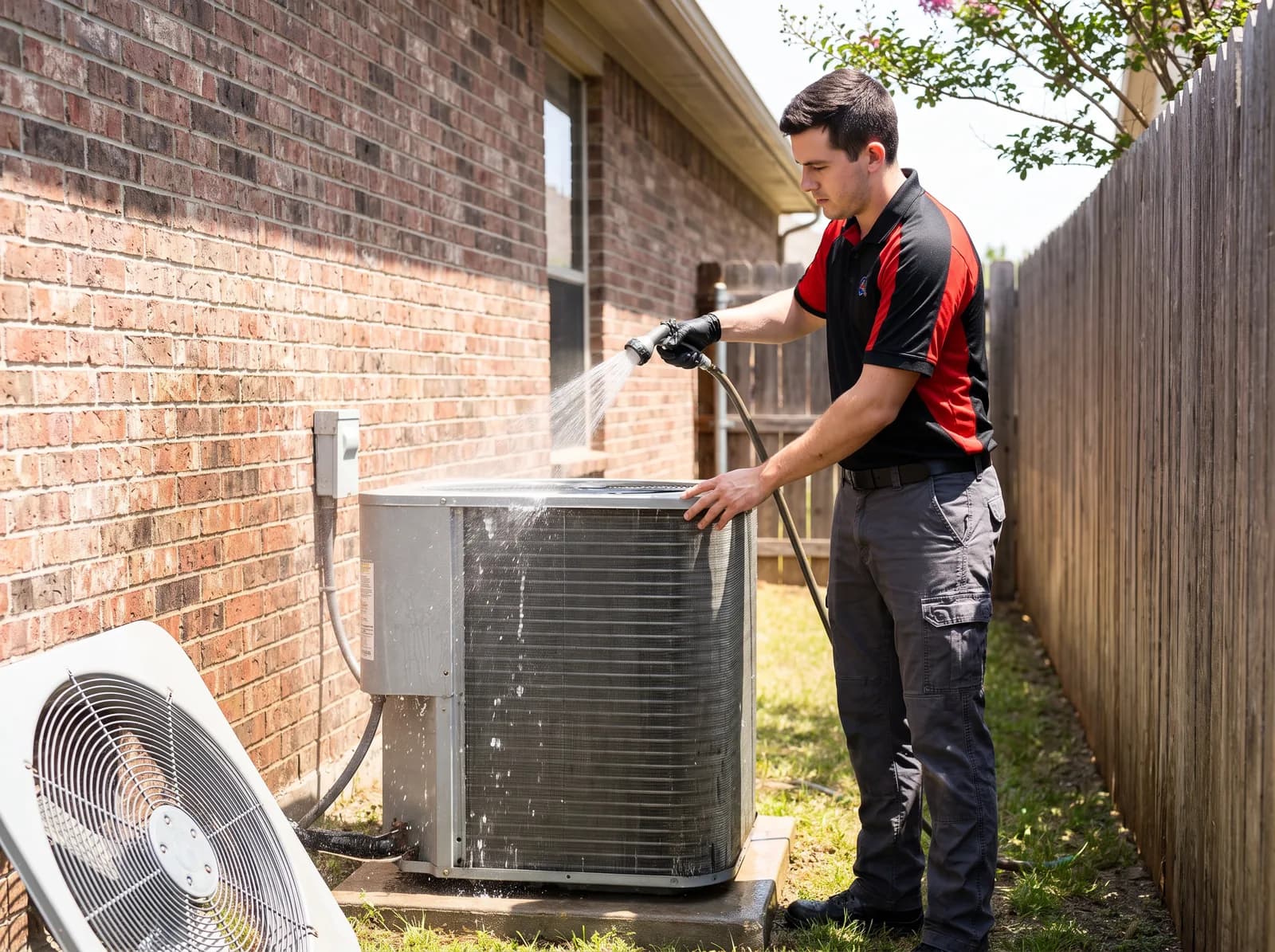
Demand for this work stacks up between March and May, which is exactly the right time to do it. A system serviced in spring has its problems found while parts are easy to get and the schedule still has room in it. The same system left alone gets found out on a no-cooling call, in the heat, on the afternoon half the corridor is phoning about the same thing.
Skipping the spring visit breaks nothing on the day. It just moves the discovery to the worst week of the year, on the equipment that runs near-constantly here from June through September.
Keep the paperwork either way. Manufacturer warranties assume the equipment has been maintained, and a service record is worth having on the day you need to make a claim. We leave you one after every visit.
The condenser first, because that's where most failures live. Electrical readings, amp draws, the capacitor test, refrigerant pressures and a coil wash.
Blower wheel, evaporator coil, filter, drain line and float switch, then the temperature split across the coil once everything is running.
Pressures, amp draws, capacitor values and the split, written down. Anything out of spec gets shown to you next to what it should read.
Repairs are quoted before we touch anything. If nothing needs doing, we say so and pack up. A clean bill of health is a normal outcome here.
If yours isn't here, call and ask. We'd rather answer it now than have you guess.
Ask Us DirectlyAll 21 inspection points on one residential system, any brand, including the condenser coil wash and the condensate drain flush. It's a new-customer offer, one unit, and it expires 09/30. If we find something that needs repair, it's quoted separately in writing and you approve it before we start.
Twice a year is the standard: cooling in spring, heating in fall. If you're only going to do one in this climate, make it the spring cooling visit, since that's the equipment carrying the load from June through September.
Sometimes, and honestly it depends on what we find. A filthy condenser coil, a clogged filter or a charge that's off will all cost you money every hour the system runs, and correcting those shows up on the bill. A system that was already clean and correctly charged won't suddenly get cheaper, and we won't pretend otherwise.
Usually yes, because the point is finding out where you stand before summer rather than during it. A tune-up won't add years to a worn compressor, but it will tell you whether you're planning a replacement on your own timeline or having one forced on you in July.
No. We service and repair every major make and model, and plenty of tune-ups end with nothing to sell. We're an American Standard Customer Care Dealer when a replacement genuinely is the answer, and financing is available on approved credit, but that conversation only happens if your equipment earns it. 138 Google reviews is the reason we work that way.
Dallas heat has a way of testing every part of your home, and your air conditioner usually takes the hardest hit.
Read More
Wondering how many watts your air conditioner uses in Dallas? Power consumption varies by system type, size, efficiency, and runtime, with central air conditioners typically using between 1,500 and 5,000 watts. Learn what affects AC energy usage, how to estimate operating costs, and the steps homeowners can take to lower summer cooling bills.
Read More
Choosing between HVAC repair and replacement can be tough, especially when an older system still runs but no longer performs well. Learn the key signs, cost factors, and 2026 efficiency considerations that can help you decide whether to repair your current system or invest in a new one.
Read More
Same-day service across the I-30 East corridor. Saturdays included, at no extra charge.