
$89
Precision Tune-Up
21-point inspection on any residential system. Catches the small failures before July does.
Claim OfferNew customers. One unit. Expires 09/30.
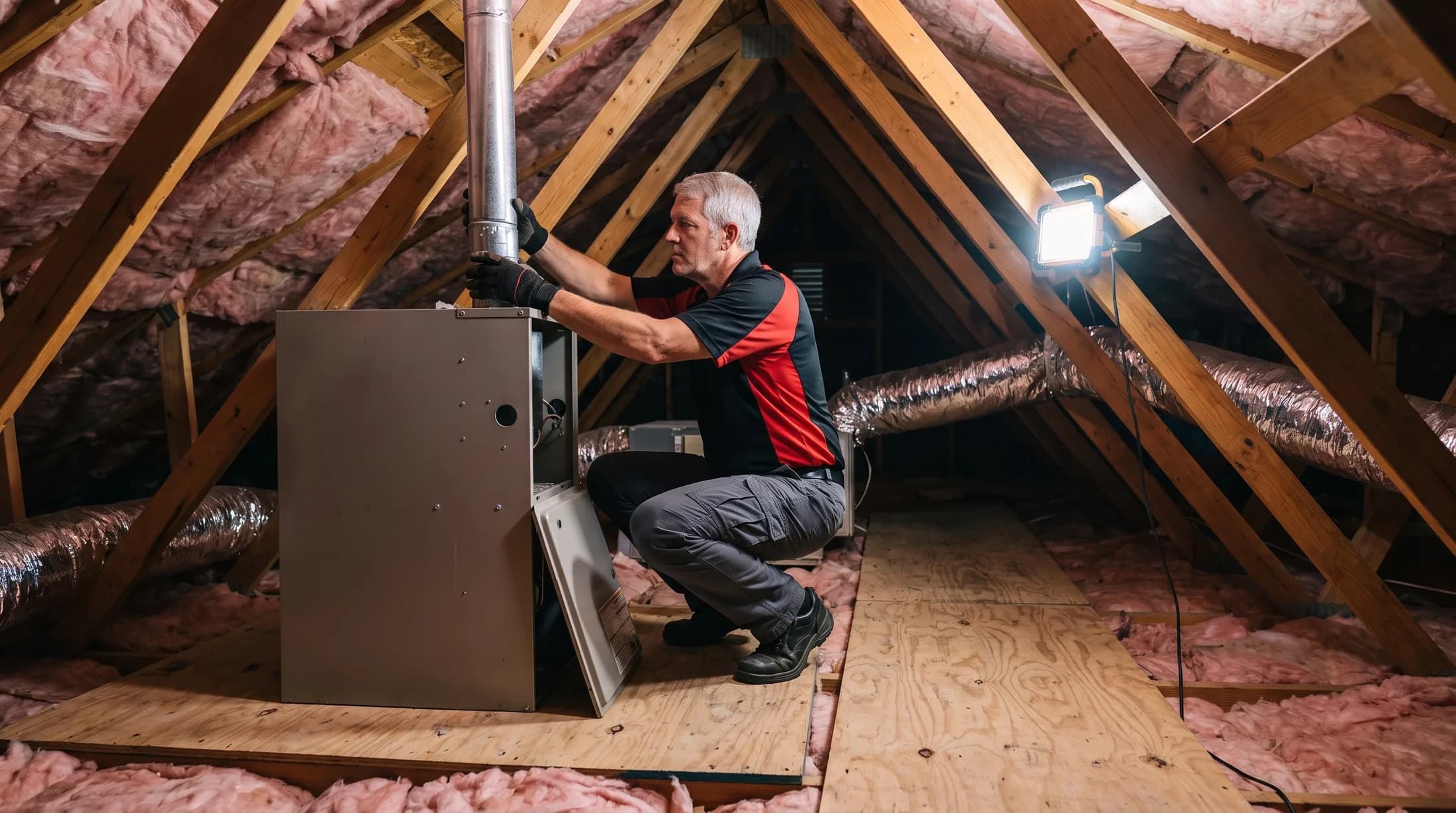
Two questions get answered before a furnace goes in: what size the house needs, and whether gas is the right answer here at all.
A furnace leads an odd life in Texas. It sits idle most of the year, carries a few genuinely cold weeks, then spends the summer as the cabinet your air conditioning blows through. This is not the job it is in Ohio.
We're family owned and based on TX-276 in Royse City, so Rockwall, Fate and Wylie are a short drive. The job goes in writing before anything is ordered, and if someone has already quoted you, bring it: the second opinion is free.
What actually moves the price on a furnace replacement:
Call (972) 278-6800 or send the form and we'll price the whole job in writing, with financing on approved credit if you want it.
Send this over and we'll get back to you. If the house is already warm, phoning is faster.
“My AC quit in July. Daniel was extremely professional, efficient and personable. He was very authentic and honest and somehow resolved the issue within roughly 17 minutes. No additional parts or sales gimmicks. Best service I've ever had.”
“We were very pleased with everything about the installation of the AC unit in our new office. It was done as described and everything is working properly and installed professionally. We would use this company again for sure.”
“Called at 7pm on a Saturday expecting an answering machine. Got a real person, and a tech at the house before noon Sunday. No weekend surcharge like they said. That's rare.”
$89
21-point inspection on any residential system. Catches the small failures before July does.
Claim OfferNew customers. One unit. Expires 09/30.
$50 OFF
Applied to any completed repair over $250. Stackable with your manufacturer warranty.
Claim OfferOne per household. Mention at booking.
FREE
Been told you need a whole new system? We'll inspect it and tell you straight, at no charge.
Claim OfferRequires a written quote from another company.

Most furnace advice online was written for places with a real winter, where you burn gas six months a year and a top efficiency tier pays for itself. A corridor furnace does nothing like that. Our heating season is short and mostly mild. The brutal one here is the cooling season.
Turn that into run hours and the conclusion flips. Efficiency saves a percentage of the fuel you burn, so the fewer hours, the less that percentage is worth. A premium furnace can take a very long time to earn back its premium over a solid mid-efficiency one when it only works a few weeks a year.
We install heat pumps too, and one machine covering both seasons is often where the money does more, especially if the AC is aging alongside the furnace. A lot of these end up on the heat pump side, and that's a fine outcome. Where gas still wins:
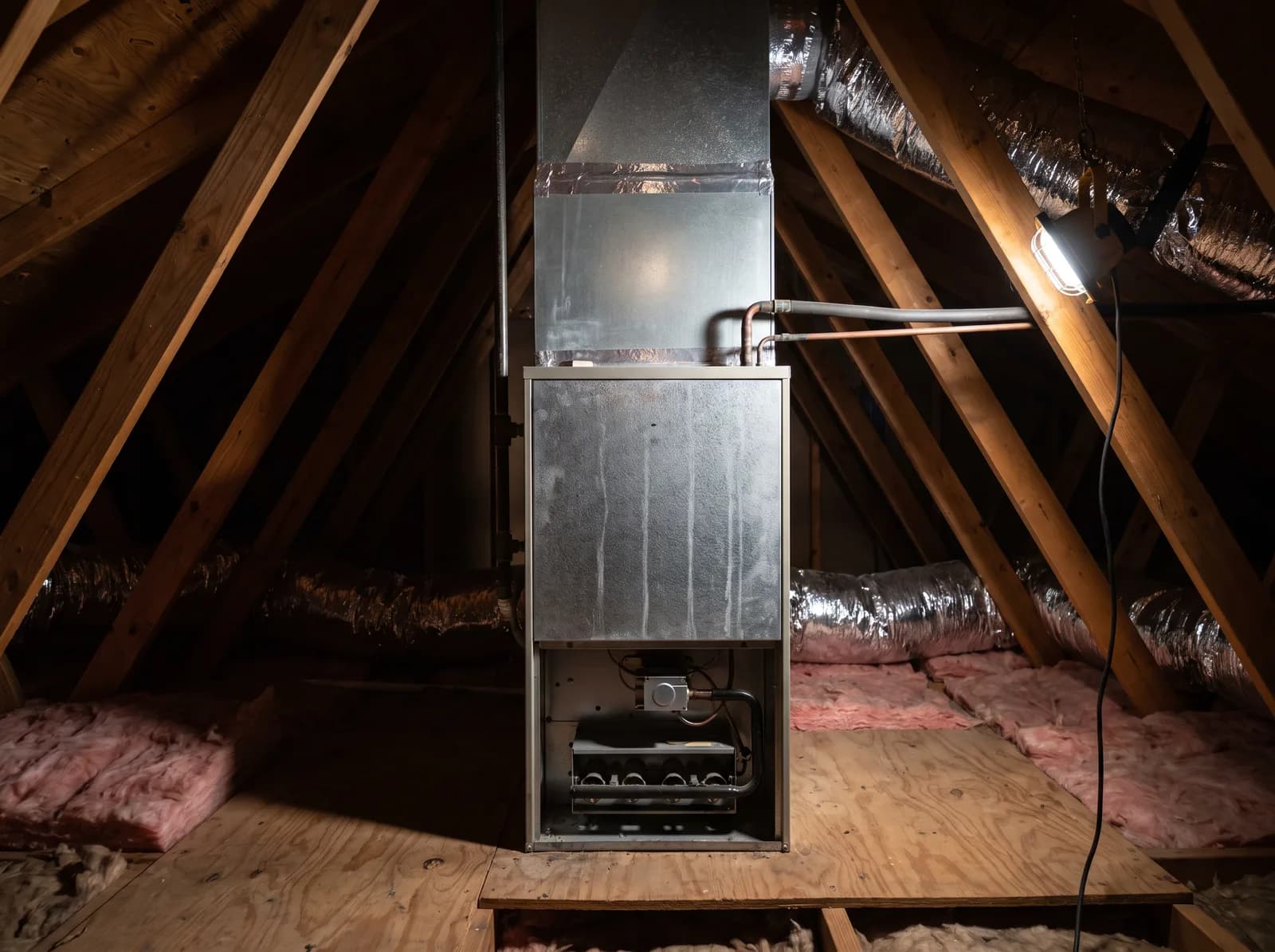
The quickest way to get this wrong is to read the rating off the old nameplate and order the same again. Oversize a furnace and it heats the thermostat faster than it heats the house: short bursts, a swing between cycles, back rooms that never catch up.
What people don't expect is that the furnace and the indoor coil usually share one cabinet, and the furnace blower is the blower that moves your cooling air all summer. Replacing one forces a decision about the other, and we settle that before we quote.
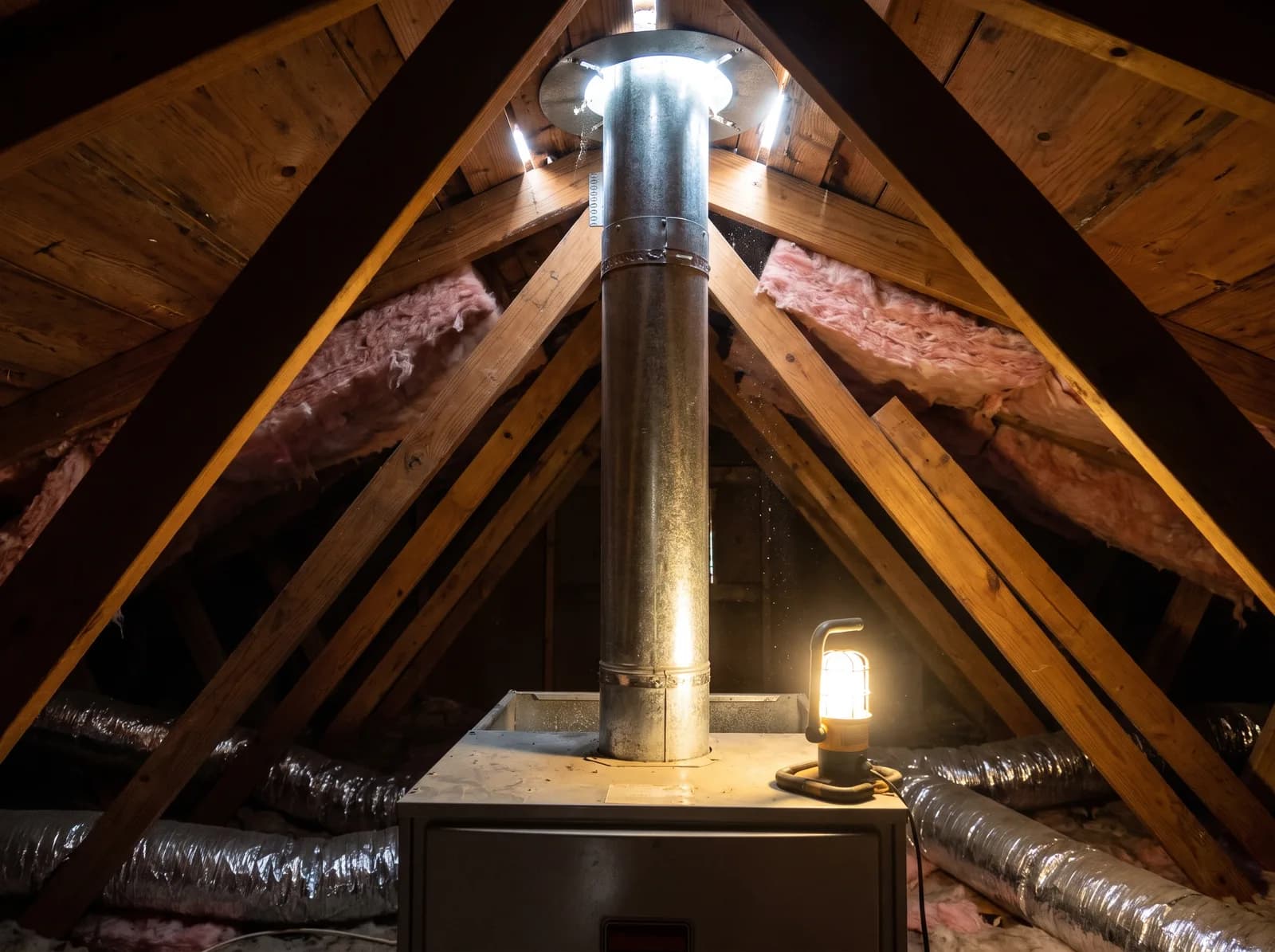
Most corridor furnaces sit horizontally on a platform in the attic, and that's where installs quietly go wrong. A gas furnace has to vent its combustion products outside and draw combustion air from somewhere clean. Safety requirements, not upgrades.
Efficiency tier decides how. A mid-efficiency furnace vents through a metal flue. A condensing one vents through plastic pipe and makes acidic condensate that needs its own drain, which in an attic means deciding where that water goes if it blocks. It belongs in the quote.
The attic also wants working clearance and a platform that holds the unit. If new gas piping has to be run, that's a licensed plumber's job and we'll say so up front.
A heating load calculation, plus a look at the flue, the gas supply, the ductwork, the existing coil and how the attic is reached.
Where gas and a heat pump are both viable, you get both in writing. Nothing is ordered until you approve a number.
Old unit out, new one set and secured, venting and combustion air run to the manufacturer's instructions, condensate and electrical done right.
Combustion checked, temperature rise brought inside spec, static pressure measured, safeties verified, carbon monoxide checked at the supply.
If yours isn't here, call and ask. We'd rather answer it now than have you guess.
Ask Us DirectlyFour things, mostly: the heating load that sets the size, the efficiency tier you choose, the venting, since a higher tier changes the flue and adds a drain, and whether the coil sharing that cabinet goes too. Quoted in writing before work starts, with financing on approved credit.
Depends, genuinely. Our heating season is short enough that a premium furnace takes a long time to justify itself, which is why a heat pump covering both seasons is often the better buy. Gas earns its place when the house is already set up for it, when you want properly hot supply air, or when hard-freeze performance matters most. We install both, so we won't steer you.
Not always, but expect the question, because the furnace and the coil usually share a cabinet and a blower. If the coil is a sensible match for the new blower, it stays. If not, doing both together beats a second changeout next year.
Sometimes, and less often than the brochures suggest. Efficiency saves a percentage of the fuel you burn, and a corridor furnace burns very little compared with one up north, so the saving arrives slowly.
Yes, free, on any written replacement quote. We'll inspect the system ourselves and say plainly whether it needs replacing, whether a repair buys another season, or whether you're being pointed at the wrong equipment for this climate. Call (972) 278-6800 and a real person answers.
Dallas heat has a way of testing every part of your home, and your air conditioner usually takes the hardest hit.
Read More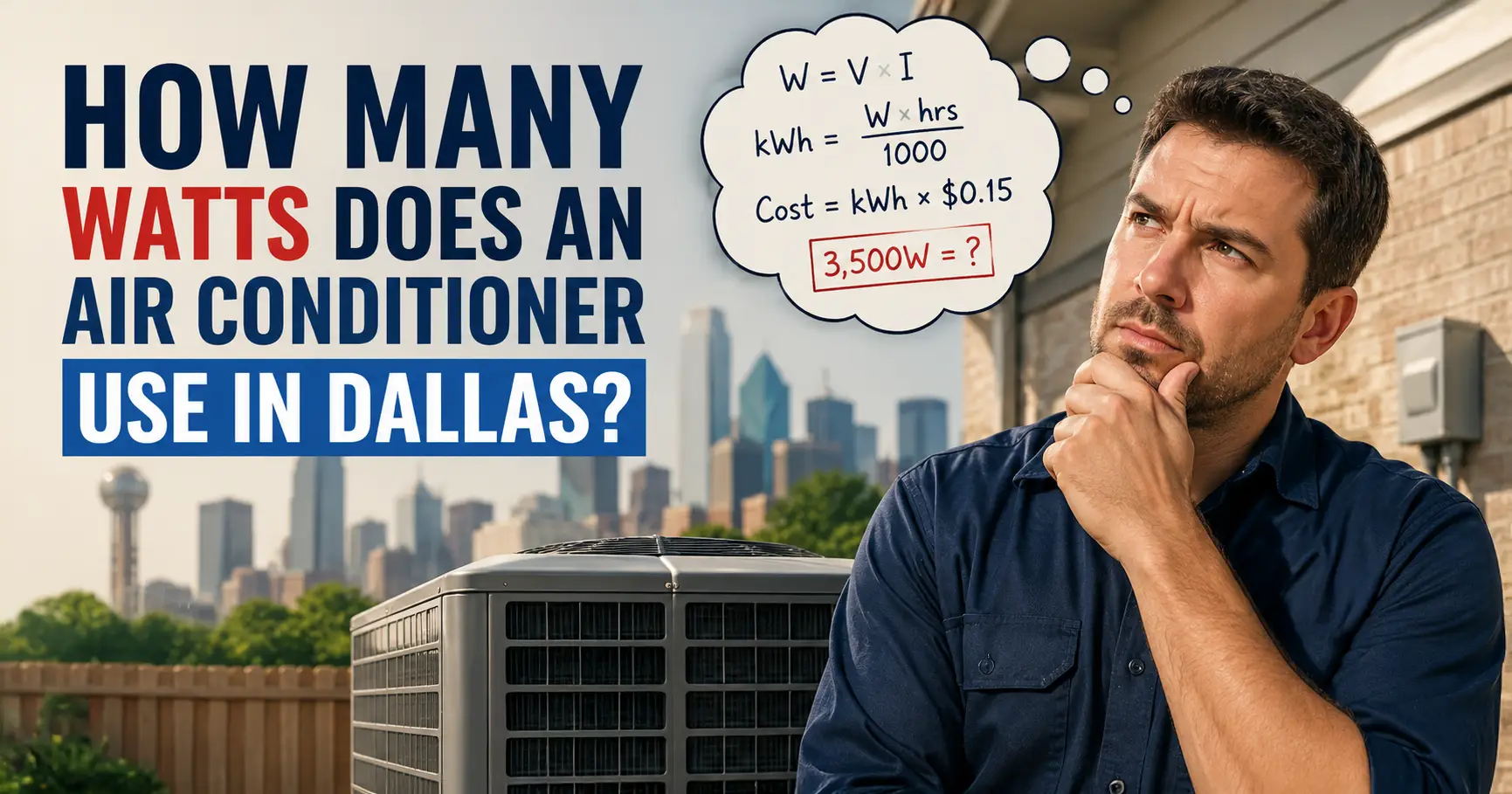
Wondering how many watts your air conditioner uses in Dallas? Power consumption varies by system type, size, efficiency, and runtime, with central air conditioners typically using between 1,500 and 5,000 watts. Learn what affects AC energy usage, how to estimate operating costs, and the steps homeowners can take to lower summer cooling bills.
Read More
Choosing between HVAC repair and replacement can be tough, especially when an older system still runs but no longer performs well. Learn the key signs, cost factors, and 2026 efficiency considerations that can help you decide whether to repair your current system or invest in a new one.
Read More
Same-day service across the I-30 East corridor. Saturdays included, at no extra charge.