

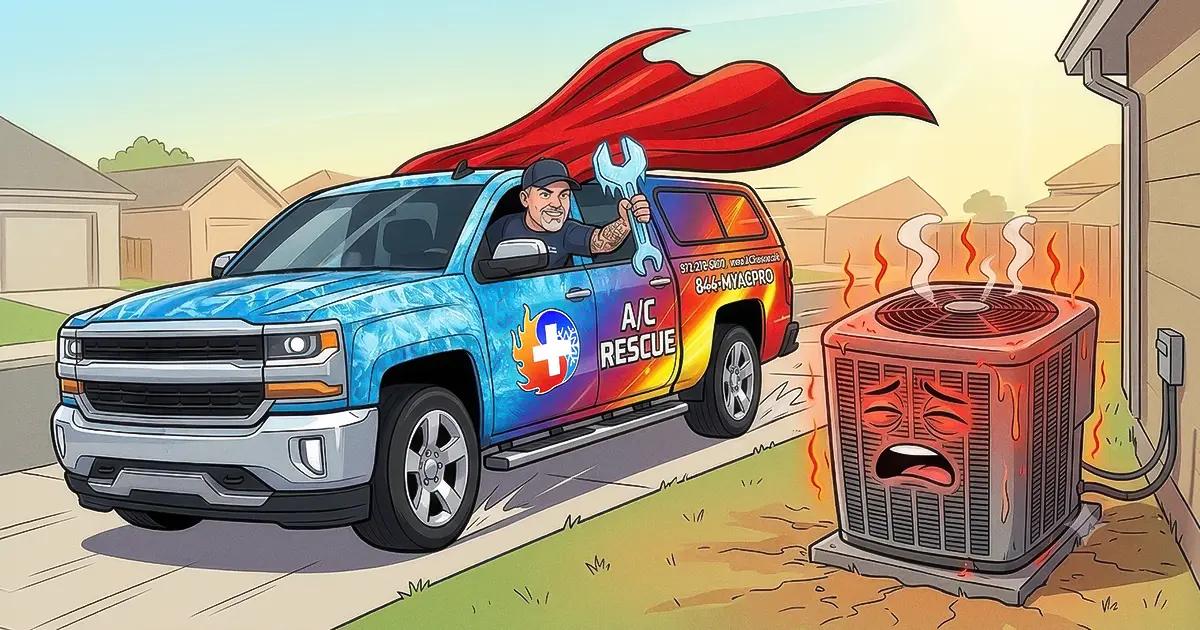
Dallas heat has a way of testing every part of your home, and your air conditioner usually takes the hardest hit. One afternoon the house feels fine, then the next day the AC seems to run nonstop without ever quite catching up. The vents may still be blowing and the thermostat may still be lit, but the rooms feel warmer than they should.
That gets frustrating fast, especially with the outdoor temperature parked near triple digits and everyone in the house counting on cool air.
Here's the reassuring part. An AC struggling in extreme heat doesn't always mean the system is failing. Sometimes it means the unit is buried under heavy strain. Sometimes a small maintenance issue is making a tough job much harder. Other times it's the warning sign of a bigger problem that needs professional AC repair in Dallas, TX.
Telling those apart helps you protect your comfort, keep your energy bills in check, and dodge a mid-summer breakdown.
Why Dallas Heat Is So Hard on Air Conditioners
Your air conditioner doesn't make cold air the way a freezer does. It pulls heat out of your home and releases it outdoors. On a mild day, that's an easy process. On a brutal Dallas afternoon, the outdoor unit has to shove that heat into air that's already hot.
The extra strain makes the system run longer than usual. The hotter it gets outside, the harder the condenser has to work to move heat away from your home. If the AC is older, dirty, low on refrigerant, poorly maintained, or hooked to leaky ductwork, the strain climbs even higher.
That's why so many homeowners notice their AC doing fine in the morning and slipping later in the day. The sun cooks the roof, attic, walls, windows, and outdoor unit. By late afternoon, your cooling system is fighting heat from several directions at once.
A properly sized, well-maintained air conditioner should still hold steady comfort, though it may run longer during extreme heat. Trouble shows up when those long run times come with weak airflow, warm air, short cycling, ice, strange noises, or rooms that never cool down.
The Thermostat Isn't Always the Problem
When the house feels hot, most people head straight for the thermostat. It's natural to figure that dropping the setting from 75 to 68 will force the AC to work faster. That's not how most residential systems operate.
Your AC cools at the same pace whether the thermostat sits a few degrees lower or way lower. Dropping the setting too far only tells the system to run longer. During a Dallas heat wave, that piles stress onto the equipment and pushes your bill higher without buying you faster relief.
A steady, realistic setting usually works better. Many homeowners find that small adjustments, paired with clean filters, closed blinds, good airflow, and routine maintenance, make a noticeable difference.
It also pays to keep heat sources away from the thermostat. Lamps, televisions, direct sun, and kitchen heat can trick it into reading the room warmer than it really is. When that happens, the AC runs longer than needed, racking up wear without improving comfort.
A programmable or smart thermostat helps if your schedule shifts through the day. It can ease off the cooling when nobody's home, then bring the temperature back down before you walk in. For a lot of Dallas homeowners, that balance cuts energy waste without giving up comfort.
Dirty Air Filters Can Make a Hot Day Worse
A clogged filter is one of the simplest AC problems, and it causes a surprising amount of trouble. Your air conditioner needs steady airflow to pull heat out of your home. Pack the filter with dust, pet hair, and debris, and the system has to work harder just to draw air through.
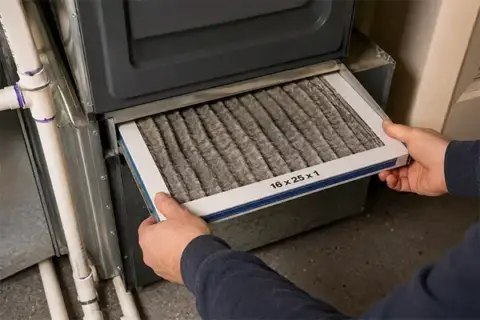
That restriction leads to weak airflow, uneven temperatures, longer run times, and a higher electric bill. It also leans on the blower motor and other parts. In some cases, poor airflow drops the indoor coil so cold it freezes.
During heavy summer use, filters load up faster than you'd expect. Homes with pets, kids, frequent visitors, remodeling dust, or high indoor dust levels may need more frequent checks. A filter that looked fine a few weeks ago can turn into a problem during a stretch of real heat.
Checking the filter is one of the easiest moves a homeowner can make before calling for repair. If it's dirty, replace it and give the system time to recover. If the airflow stays weak or the AC still can't cool the house, another issue may need attention.
Your Outdoor Unit Needs Room to Breathe
The outdoor unit has an important job. It releases the heat collected from inside your home, and to do that it needs open airflow around the condenser coil.
Grass clippings, leaves, weeds, shrubs, dirt, and cottonwood fluff all block that airflow. When the outdoor unit can't breathe, heat gets trapped. The system runs hotter, works harder, and loses cooling power. On a mild day you might not notice much. On a 100-degree day in Dallas, restricted outdoor airflow can push the system past its limits.
Keep the area around the unit clear. Trim nearby plants and clear the debris around the cabinet. Skip stacking items against it or building anything too close. The unit needs space to pull air in and push heat out.
The condenser coil needs to stay clean, too. A layer of dirt on the coil works almost like a blanket, making it harder for the unit to shed heat. Professional maintenance usually covers checking and cleaning the coil as needed, which sharpens performance during peak summer weather.
Low Refrigerant Isn't Something to Ignore
When your AC runs low on refrigerant, it can't move heat properly. That leads to warm air from the vents, longer cooling cycles, ice on the refrigerant lines, or a system that never reaches the thermostat setting.
Refrigerant doesn't get burned up like gasoline. A low level almost always means a leak somewhere in the system. Adding more without finding that leak buys temporary relief, and the problem tends to circle right back.
Low refrigerant can also damage the compressor, one of the most expensive parts in the whole system. That's why refrigerant issues belong to a trained HVAC technician. A professional can inspect the system, find signs of a leak, and recommend the right repair.
If your air conditioner is blowing warm air during extreme Dallas heat, don't chalk it all up to the outdoor temperature. Heat can expose refrigerant problems that were already building.
Overheated Parts Can Shut the System Down
Air conditioners are built for summer, but extreme heat still leans hard on the mechanical and electrical parts. Fan motors, capacitors, contactors, wiring, and compressors all work under more stress when the system runs for long stretches.
When a part overheats or weakens, the AC may shut off, cycle strangely, hum without starting, or trip a breaker. Sometimes it restarts after cooling down, which makes the problem seem random. A unit that quits during the hottest part of the day and comes back later still needs attention.
Repeated overheating shortens the life of the system. It also turns a smaller repair into a larger one. If your AC keeps stopping, buzzing, clicking, or fighting to start, call for repair before the next heat wave piles more pressure on the equipment.
Attic Heat and Poor Insulation Add to the Load
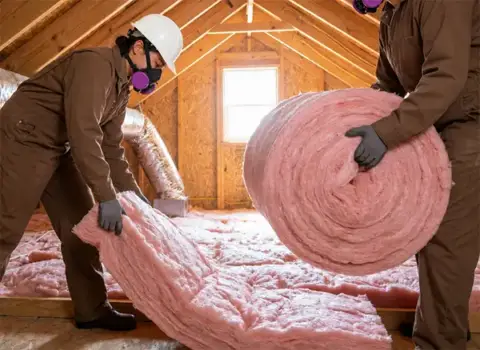
The AC is only one piece of your home's cooling system. Your insulation, windows, doors, attic ventilation, and air sealing all shape how hard the air conditioner has to work.
In summer, attic temperatures can climb far above the outdoor reading. When the attic lacks proper insulation or has air leaks, that heat drifts down into your living space. Your AC then has to remove heat that should have been stopped in the first place.
West-facing rooms, upstairs bedrooms, bonus rooms, and areas near the attic tend to feel the worst in the late afternoon. Closing the blinds or curtains cuts the heat gain from direct sun. Sealing gaps around windows and doors keeps cooled air inside. Better attic insulation makes the home easier to cool and can trim run time during extreme heat.
These upgrades won't erase the need for AC service, but they help a healthy system perform better.
When a Struggling AC Needs Professional Repair
Some AC issues clear up with a clean filter, better thermostat habits, or a quick clearing of debris around the outdoor unit. Others need a trained technician.
Call A/C Rescue if your system blows warm air, freezes up, leaks water, trips the breaker, makes unusual noises, or shuts off over and over. Schedule service, too, if the AC runs all day but can't cool the home, especially when the problem hangs on after the sun goes down.
A sudden spike in the electric bill can also flag trouble. Higher bills are normal in hot weather since the AC runs more often. A sharp jump that doesn't match your usage may point to dirty coils, failing parts, duct leaks, refrigerant trouble, or poor airflow.
Pay attention to changes. A new noise, a new smell, or a room that suddenly feels warmer can be the first clue something's wrong. Calling early usually leaves you more repair options and helps you avoid emergency service during the hottest part of summer.
Preventive Maintenance Helps Your AC Survive Dallas Summer
Preventive maintenance goes past dodging breakdowns. It helps your system cool better, run more efficiently, and last longer.
During a professional tune-up, a technician can inspect the parts homeowners can't easily reach: electrical connections, capacitors, coils, refrigerant performance, drain lines, blower components, thermostat operation, and overall airflow. Small problems get corrected before they leave you without cooling.
Maintenance matters most before the fiercest part of summer. Once Dallas temperatures climb, HVAC companies fill up with emergency calls. A tune-up ahead of peak heat lets your system enter the season in better shape.
A maintained system still has to work hard through extreme weather, but it stands a far better chance of keeping up. It's the difference between asking a prepared system to do a hard job and asking a neglected one to push through stress it can't handle.
Should You Repair or Replace an Older AC?
If your air conditioner is older and struggling every summer, repair may not be the best long-term answer. Frequent breakdowns, rising energy bills, uneven cooling, expensive repairs, and poor humidity control can all point toward replacement.
A newer, energy-efficient system may cool more consistently and use less energy. It can also give you better airflow, quieter operation, and steadier performance through Dallas heat waves.
Replacement isn't always necessary, though. Some systems just need cleaning, a part swapped out, duct improvements, or better maintenance. A trustworthy technician can help you weigh the condition of your system, the cost of the repair, and the payoff of an upgrade.
For homeowners planning to stay put, comfort and reliability carry weight. Spending another summer wondering whether the AC will make it through the week gets old fast.
Simple Habits That Help Your AC on Hot Days

A few daily habits ease the strain on your system during extreme heat. Keep the blinds or curtains closed through the hottest part of the afternoon, especially on the sunny sides of the home. Hold off on the oven, dryer, and other heat-throwing appliances during peak afternoon hours when you can. Make sure the vents are open and not buried behind furniture.
Check your air filter before the weather turns severe. Clear the outdoor unit after mowing or storms. Keep interior doors positioned to support good airflow. Don't brush off small performance changes.
None of this fixes a mechanical problem, but it helps a healthy AC do its job with less stress. It can also make your home feel more comfortable without constantly reaching for the thermostat.
A/C Rescue Is Ready to Help Dallas Stay Cool
Extreme heat is part of life in Dallas, but an uncomfortable home doesn't have to be. If your AC is struggling, running constantly, blowing warm air, or driving up your energy bills, the team at A/C Rescue can help.
Our technicians can inspect your system, pin down the cause of poor cooling, and lay out practical options for repair or maintenance. Whether your home needs a seasonal tune-up, urgent AC repair, airflow improvements, or honest advice about an aging system, we're here to keep you comfortable when the Texas heat is at its worst.
Don't wait for a small cooling problem to grow into a full system shutdown. Contact A/C Rescue in Dallas, TX today for dependable air conditioning repair, maintenance, and cooling service you can count on.
I can also prepare the meta title, meta description, and excerpt for this post.