Walk through most Dallas homes and you'll feel it immediately. Upstairs is comfortable. Downstairs? You're basically in an ice age. Or maybe that back bedroom feels like a sauna no matter what you do, and the living room can't seem to get above 70.
Most families end up in a constant battle over the thermostat. Someone's always too hot or too cold. But here's the thing: the problem usually isn't the temperature setting. It's that your HVAC system treats every room exactly the same, and your home just doesn't work that way.
That's what zoning fixes.
A lot of homeowners haven't heard much about zoning, or they've heard the term but don't really understand what it means or whether it's worth the investment. If uneven temperatures are making your house less comfortable than it should be, or if you're watching your energy bills climb because you're heating and cooling rooms nobody's using, zoning is worth understanding.
Here's what you actually need to know.
What Is HVAC Zoning?
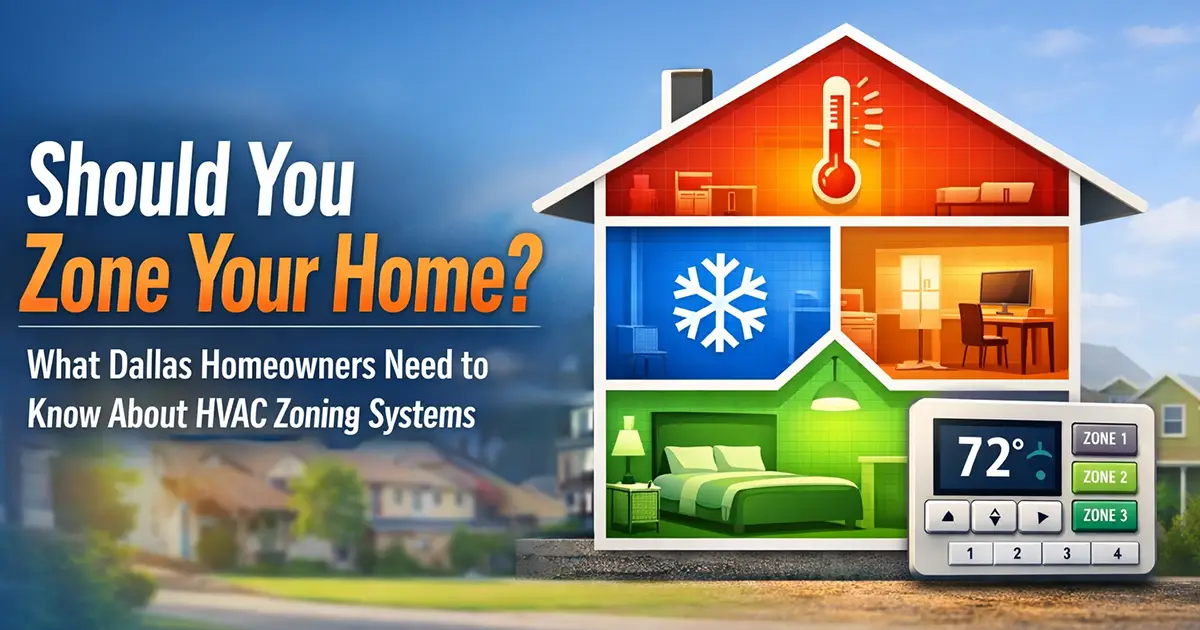
Zoning splits your home into separate areas, each with its own thermostat. Instead of one thermostat in the hallway calling all the shots for your entire house, a zoned system delivers heated or cooled air to specific rooms based on what those rooms actually need.
It works through motorized dampers installed in your ductwork. These dampers open and close depending on which zones are calling for air. A control panel takes input from each thermostat and directs the dampers accordingly. You can heat or cool just the parts of the house you're using without running the system full blast everywhere.
Mini-split systems operate differently but accomplish the same goal. Each indoor unit acts as its own zone, giving you room-by-room control.
One thing zoning can't do: heat one part of your home while cooling another. That requires two separate systems. But even without that capability, zoning gives you significantly better control over comfort.
Why Homeowners Look Into Zoning
Some homes practically beg for zoning. If any of these sound familiar, you're already dealing with issues zoning can solve:
- Hot or cold spots that never match the rest of the house
- A two-story home where the upstairs is always 10 degrees warmer
- A room over the garage or attic bedroom that's consistently uncomfortable
- Sun-facing rooms that turn into saunas during the day while others stay cool
- Spare rooms or areas you rarely use but keep heating and cooling anyway
All of these trace back to the same root problem. Your system is treating every square foot the same, even though your home has rooms with wildly different heating and cooling needs.

Better Comfort, Better Control
When your HVAC system can target where it sends air, your home becomes more livable. Zoning lets you:
- Keep bedrooms cooler at night without turning the kitchen into a freezer
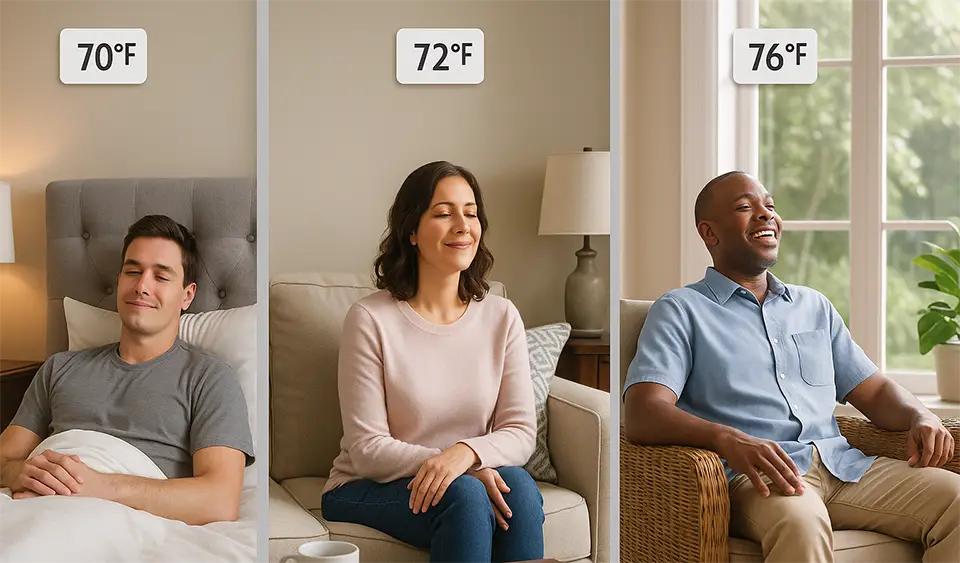
- Adjust temperatures in rooms based on who's using them and when
- Account for how much sunlight hits certain rooms or how well they're insulated
- End thermostat fights between family members who run hot or cold
Maybe you have a home office that gets hammered by afternoon sun. Or a guest room that sits empty most of the year. Zoning means you stop wasting energy trying to make every room feel the same.
Does Zoning Actually Save Energy?
If you're thinking this sounds expensive, consider what zoning does for your utility bills.
When your HVAC system isn't conditioning the entire house all the time, you use less energy. Zoning allows unused rooms to go idle while the system focuses only on spaces that need it.
The U.S. Department of Energy says zoning can reduce HVAC energy usage by up to 30 percent. That's real money staying in your pocket every month, and it means your home uses less energy overall.
There's another benefit: less wear and tear on your equipment. Your furnace and air conditioner won't run as hard or as often, which translates to fewer repairs and a longer lifespan for your system.
What Does Zoning Cost?
Installation costs depend heavily on how your existing setup is built.
If your ductwork already has separate trunk lines for different areas (more common in larger or newer homes), adding zoning might run you $4,500 to $7,000. That includes dampers, thermostats, and the zone control panel.
If your home wasn't built with zoning in mind, expect costs between $5,000 and $8,500 or more. The price jumps because of the labor involved in retrofitting ductwork and making sure airflow stays balanced across all zones.
Single-stage systems usually aren't compatible with zoning. They run at full capacity every time they kick on and can't dial back output when only one zone needs air. Forcing a single-stage system to work with dampers risks short cycling, poor performance, and premature equipment failure.
Manual vs. Automatic Dampers
Manual dampers get adjusted by hand, usually seasonally. You might close off certain ducts in summer to push more cool air upstairs, then flip them in winter. They're cheap and simple, but you have to remember to change them.
Automatic dampers are controlled by your thermostats and zoning panel. They respond to real-time temperature readings and adjust themselves. These cost more upfront but give you true set-it-and-forget-it convenience.
What If Full Zoning Isn't Practical?
Sometimes zoning your existing system doesn't make sense financially or structurally. You still have options.
Smart thermostats with remote sensors can help. Place sensors in problem rooms and let the thermostat average the readings to avoid overcooling or overheating any single area.
Variable-speed HVAC systems also deliver better comfort by running at lower speeds for longer stretches, which helps maintain more even temperatures throughout your home.
Mini-split systems offer zone-level control for specific rooms or additions. If you're finishing a garage, attic, or sunroom, a mini-split might be the most efficient way to add comfort without touching your main system.
Why You Need a Pro to Evaluate Your System
You can't figure out whether zoning makes sense by reading articles online or watching installation videos. You need a qualified HVAC technician from AC Rescue to look at your system, assess your ductwork, and understand your home's specific needs.
We can tell you whether your equipment supports zoning, how your ducts might need modification, and whether a full zoning system makes sense or if there's a simpler fix that'll do the job.
Final Thoughts
If your Dallas home has uneven temperatures or if your family can't agree on thermostat settings, zoning might solve both problems. AC Rescue helps homeowners evaluate their systems, explore zoning options, and create efficient setups that fit your needs and budget.
Building an addition? Replacing old equipment? Just tired of paying to heat and cool empty rooms? Zoning could make your home more comfortable all year.
Contact us today at (972) 278-6800 to schedule a consultation and find out if zoning is right for your home.
Filed Under
- Air Conditioning
- Ductwork
- Energy Efficiency
- Heating
- HVAC Upgrades